The Impact of Pausing Your SIPs on Your Long-Term Goals
By Saahil Madhogaria
About the Author
Saahil Madhogaria is an MBA student at SOIL Institute of Management with a background in Game Art & Animation and experience as a 3D Artist. He writes about marketing, business, personal finance, careers, and MBA life.
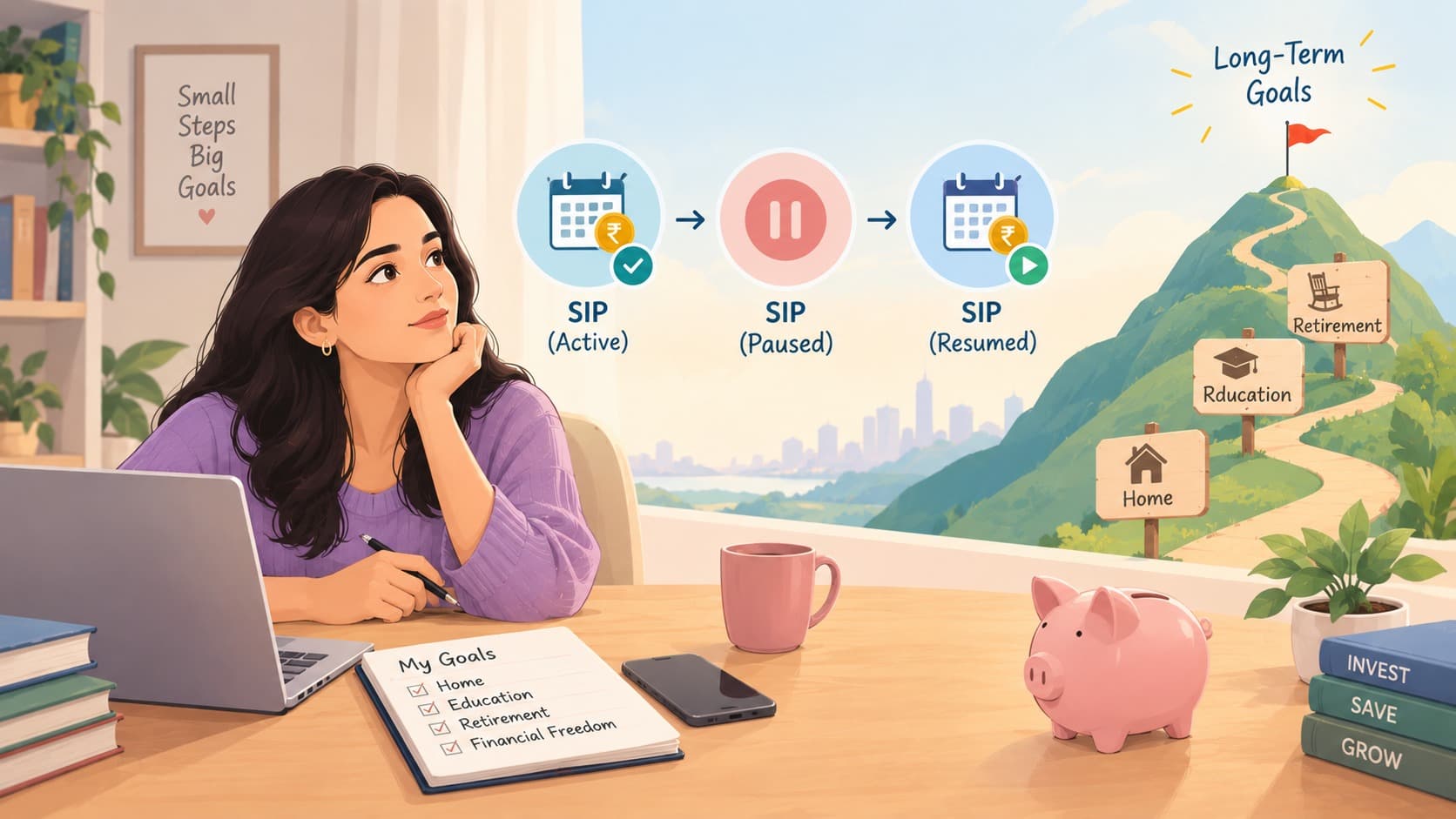
Understand the impact of pausing SIPs on long-term goals, what happens when you miss an instalment, and how to resume investing without disrupting your financial plan.
The Impact of Pausing Your SIPs on Your Long-Term Goals
A Systematic Investment Plan (SIP) helps investors contribute regularly towards financial goals such as retirement, buying a home, funding education, or building long-term wealth. But life does not always go according to plan. An unexpected expense, job change, reduced income, or family responsibility may make it difficult to continue investing every month.
Pausing an SIP during such situations is not necessarily a financial mistake. However, understanding the impact of pausing SIP contributions can help you make an informed decision without losing sight of your long-term goals.
What Happens When You Pause an SIP?
Pausing an SIP generally means temporarily stopping future investments while allowing your existing mutual fund units to remain invested. The exact process and availability of a pause facility depend on the mutual fund, investment platform, and applicable rules.
Your existing units do not automatically disappear when you pause contributions. They continue to experience the performance of the underlying scheme, including potential gains and losses.
The immediate change is that new money stops entering your investment portfolio. This can affect how quickly you accumulate the corpus required for your financial goals.
For example, if you invest ₹5,000 monthly towards retirement and pause contributions for six months, you will miss ₹30,000 in planned contributions. The eventual impact may be larger or smaller depending on how the investment performs and when you resume.
Stop SIP vs Pause SIP: What Is the Difference?
Although the terms are sometimes used interchangeably, pausing and cancelling an SIP can involve different processes.
Pausing an SIP: This temporarily suspends scheduled contributions, where the facility is available. You can potentially restart contributions later without creating an entirely new investment plan.
Stopping an SIP: This cancels the existing recurring instruction. Your accumulated mutual fund units generally remain invested unless you separately redeem them.
Neither action necessarily means selling your investments. Cancelling an SIP is also different from exiting a mutual fund scheme.
Before making a change, check the rules of your investment platform, including notice periods, available pause options, and the procedure for restarting contributions.
What Is the Impact of Missing One SIP Instalment?
Missing SIP instalments does not automatically mean that your entire investment plan has failed. A single missed contribution is usually different from pausing investments for several months or years.
The effect of missing one SIP depends on your investment amount, the time remaining until your goal, and the performance of your investments.
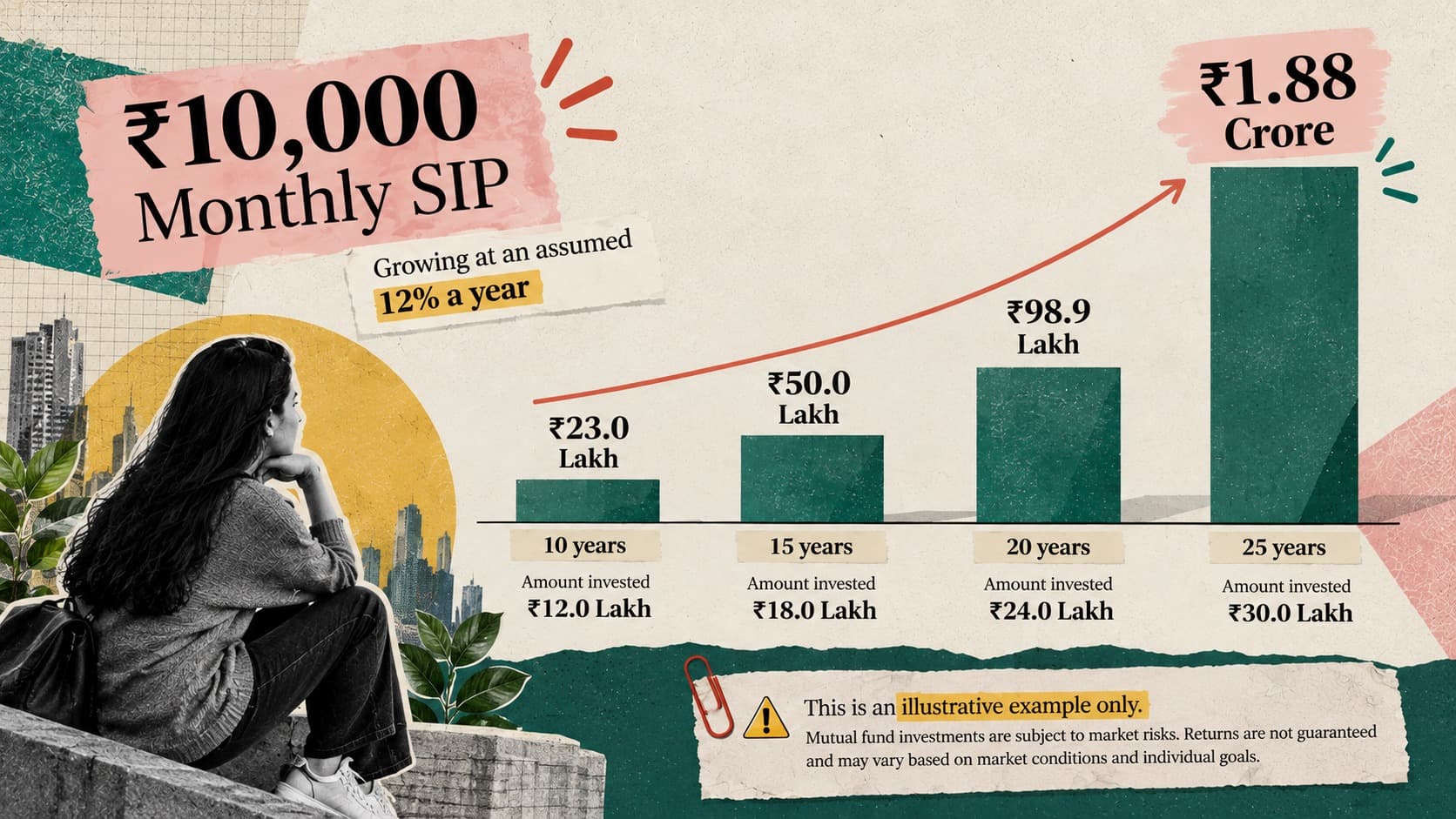
Consider an investor contributing ₹10,000 monthly towards a long-term goal. Missing one instalment means ₹10,000 less is invested at that point. That amount also loses the opportunity to participate in future market performance during the remaining investment period.
However, mutual fund returns are not guaranteed. Missing an instalment does not translate into a fixed or predictable amount of lost returns.
The more important concern is whether occasional missed payments become a recurring pattern that prevents you from reaching your target.
How Does Pausing SIPs Affect Long-Term Goals?
The long-term impact of pausing mutual funds depends largely on the duration of the pause and your ability to make up for the contributions later.
1. A smaller potential corpus: Fewer contributions can reduce the amount available for your goal, especially when the pause continues for a long period.
2. Less time for compounding: Money that is not invested cannot participate in potential investment growth during that period. The effect depends on market performance and the remaining investment horizon.
3. A higher future savings requirement: If your target remains unchanged, you may need to increase future contributions or extend the timeline, where possible.
4. Pressure on other financial goals: A prolonged pause may affect retirement, education, or home-buying plans if the original target is not reviewed.
For example, someone saving for a home down payment in five years may have less flexibility than someone investing for retirement several decades away. The closer the goal, the more carefully the investor should assess the effect of a pause.
When Should You Consider Pausing Your SIP?
Pausing can be reasonable when continuing contributions would create financial stress. Situations may include:
Temporary unemployment or reduced income.
Unexpected medical or household expenses.
High-interest debt that needs urgent attention.
A major change in family responsibilities.
The need to rebuild emergency savings.
Your immediate financial stability matters more than maintaining an SIP at any cost. Borrowing money to continue investing may be particularly unsuitable when the borrowing carries high interest.
Before pausing, review your budget and consider whether a smaller contribution is possible. If your financial circumstances are genuinely difficult, a temporary pause may be more sensible than straining essential expenses.
Kuberzo's SIP Calculator can help investors model different monthly contribution scenarios.
How to Resume a Paused SIP for Your Goals
Resuming paused SIP investments should begin with a review of your current finances rather than automatically returning to the previous amount.
Step 1: Reassess your budget. Check your income, essential expenses, debt repayments, and emergency savings.
Step 2: Review your goal. Calculate how much you have already accumulated and how much more you need.
Step 3: Set a sustainable contribution. Restart with an amount you can consistently afford. You can increase it later if your finances improve.
Step 4: Check your investment allocation. Confirm that your existing mutual fund investments still suit your time horizon and risk tolerance.
Step 5: Review the timeline. If the pause has created a savings gap, consider increasing contributions gradually or revising the goal date if practical.
Avoid trying to recover every missed instalment immediately if doing so would strain your finances.
Kuberzo's guide to different types of mutual funds can help investors understand how equity, debt, hybrid and passive categories differ.
How Can You Maintain Discipline in Goal-Based SIP Investing?
Discipline in goal based SIP investing does not mean investing without interruption under every circumstance. It means making deliberate decisions and returning to your plan when circumstances allow.
Keep separate targets for important goals, review progress periodically, and maintain emergency savings so unexpected expenses are less likely to disrupt long-term investments.
The Kuberzo SIP discipline approach can be built around three habits: invest consistently when affordable, review your plan after significant financial changes, and resume contributions with a realistic amount when your situation improves.
Contact us for a more personalised guidance.
Key Takeaway
Pausing an SIP does not automatically undo your past investments, but a prolonged pause can affect your ability to achieve long-term financial goals. The impact depends on how much you miss, how long you remain out of the market, and how much time remains before the goal.
Prioritise essential expenses and financial stability when necessary. Then reassess your target, restart contributions when affordable, and make adjustments based on your circumstances rather than panic.
A sustainable investment plan is not one that never changes. It is one you can adapt and return to without losing sight of your financial goals.
Frequently Asked Questions
Will I lose my existing mutual fund investments if I pause my SIP?
Generally, no. Existing units remain invested unless you redeem them, but their value can rise or fall with the market.
Is missing one SIP instalment a serious problem?
One missed instalment does not automatically derail a goal. Repeated missed contributions may create a larger savings gap over time.
Can I restart an SIP after cancelling it?
Usually, you can set up a new SIP, subject to the platform's process and scheme requirements.
Should I pause my SIP to build an emergency fund?
If you lack adequate emergency savings and essential expenses are at risk, prioritising accessible reserves may be sensible. Review your circumstances before deciding.
Should I increase my SIP after a long pause?
Only if your budget permits. Calculate the remaining goal gap and choose a sustainable contribution rather than stretching your finances to compensate immediately.