How to Turn a ₹1 Crore Mutual Fund Portfolio Into Regular Income Through an SWP
By Divay Diya
About the Author
Divay Diya is a business and digital marketing enthusiast with expertise in market research, SEO, and strategic planning. She explores business growth, marketing, investing, and financial markets, translating research into actionable insights.
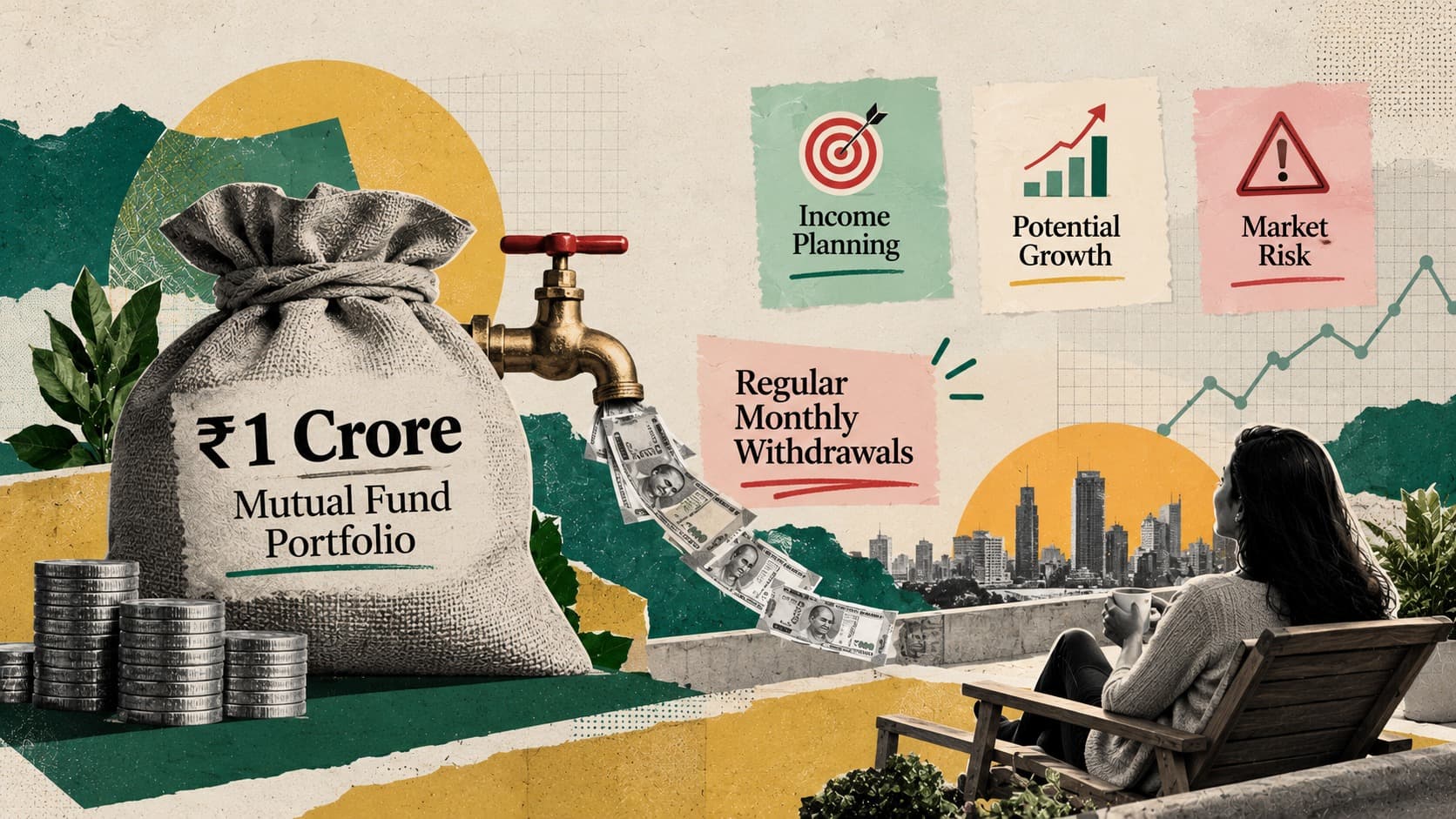
What if your ₹1 crore mutual fund portfolio could do more than just sit invested? A Systematic Withdrawal Plan (SWP) can help you turn your investments into a regular monthly income while keeping the remaining money invested. But how much can you safely withdraw, how long could your money last, and what happens when markets fall? Explore practical examples, potential returns, withdrawal strategies, and the risks every investor should understand before setting up an SWP.
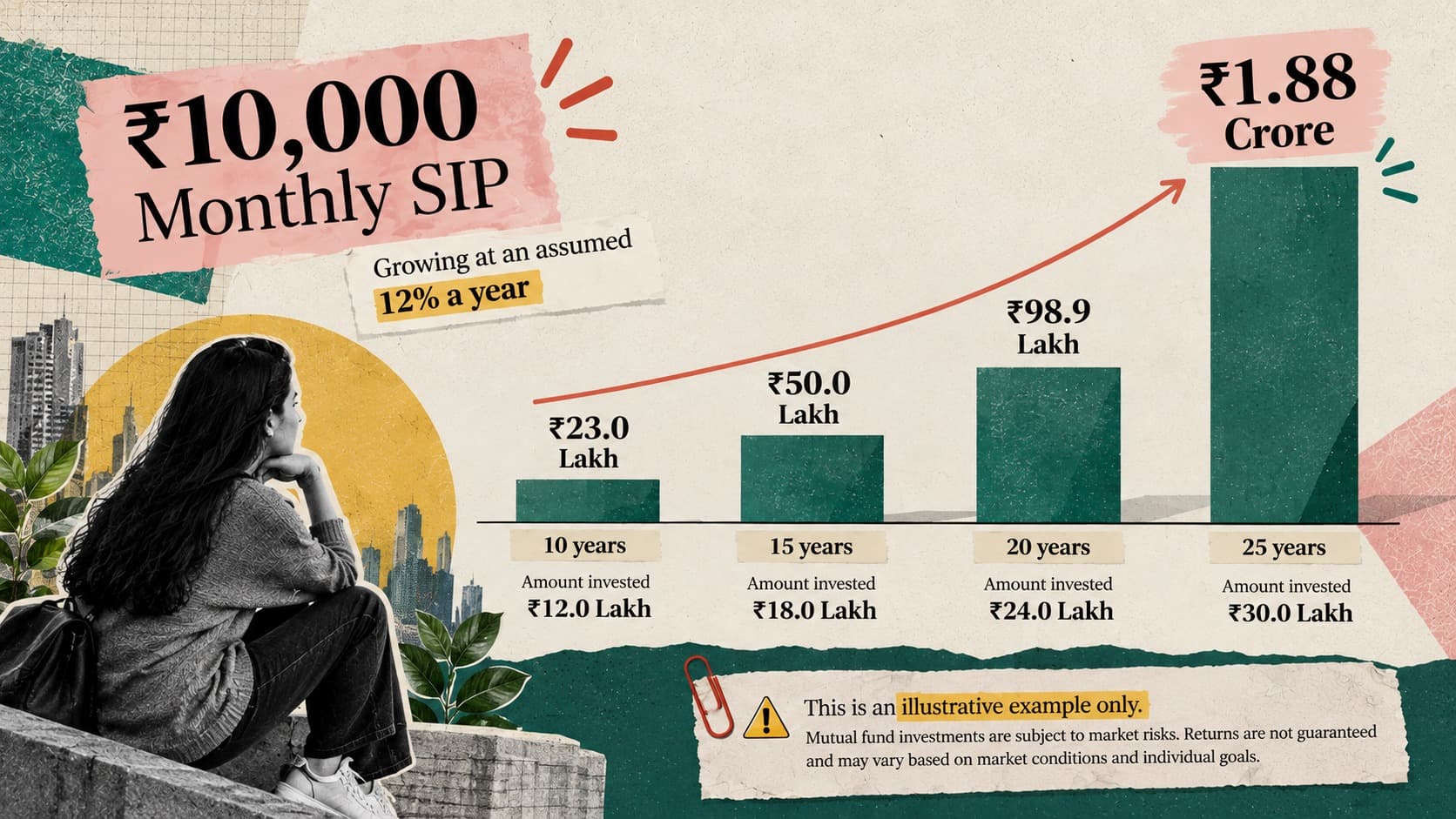
Many years ago, Aarav began investing ₹10,000 a month through a Systematic Investment Plan (SIP). Now, at 45, his mutual fund portfolio is worth around ₹1 crore. His question has changed: how can he use this money to support regular expenses without redeeming everything at once?
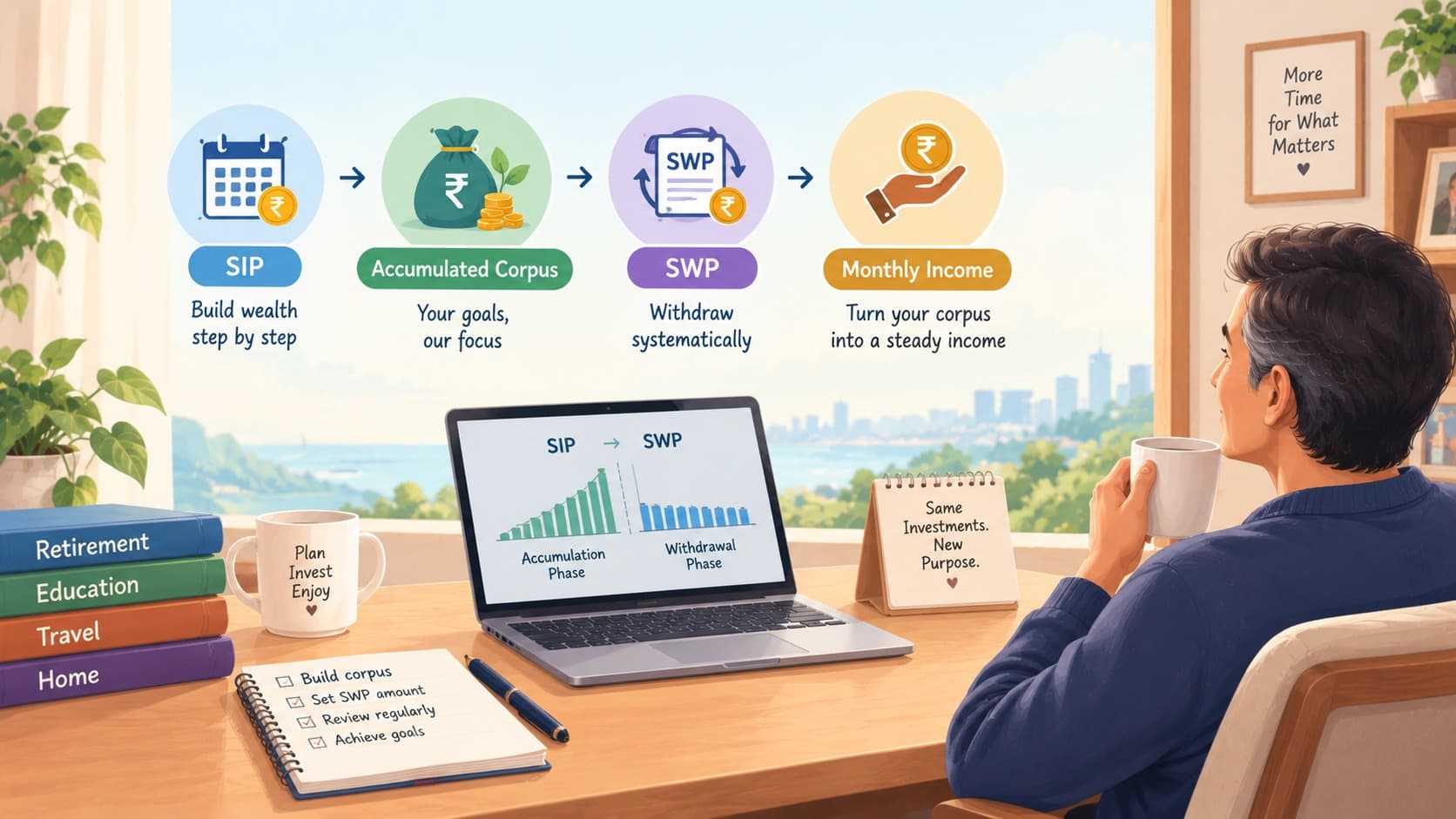
A Systematic Withdrawal Plan (SWP) allows regular withdrawals while the remaining investment stays in the market. It is not guaranteed income; sustainability depends on withdrawals, returns, costs, taxes and time.
What Is a Systematic Withdrawal Plan?
A Systematic Withdrawal Plan instructs a mutual fund to redeem a fixed amount or number of units at regular intervals. A SIP invests money; an SWP withdraws it by selling units.
Suppose Aarav withdraws ₹50,000 each month. The fund redeems enough units at the applicable Net Asset Value (NAV); the rest remains invested and can rise or fall.
The ₹50,000 is not simply interest on ₹1 crore. It comes from redeeming units and may represent both invested capital and gains. If returns are weak or withdrawals too large, the portfolio can shrink. Kuberzo’s SWP Calculator compares hypothetical withdrawal levels and periods; it is not a promise.
How Long Could ₹1 Crore Last With a ₹50,000 Monthly SWP?
There is no single answer. It depends on the returns earned by the remaining portfolio and the amount withdrawn over time. Consider a ₹1 crore starting corpus and a fixed ₹50,000 withdrawal at the end of every month.
Assumed annual return | Estimated balance after 20 years | Estimated balance after 30 years |
|---|---|---|
6% | ₹1.00 crore | ₹1.00 crore |
8% | ₹1.98 crore | ₹3.48 crore |
10% | ₹3.53 crore | ₹8.53 crore |
12% | ₹5.95 crore | ₹18.47 crore |
These figures are mathematical illustrations, not forecasts. They assume a constant return each month, monthly compounding and withdrawals at month-end. Real markets do not deliver smooth returns. The figures exclude tax, fees and inflation.
At the assumed 6% rate, the monthly return in this simplified model exactly matches the ₹50,000 withdrawal, so the balance stays at ₹1 crore. At higher assumed returns, the balance grows. This should not be read as evidence that a fund can reliably earn these rates or that Aarav can safely withdraw this amount indefinitely. Real returns vary, and the order in which they occur matters.
Why Does the Withdrawal Amount Matter?
Aarav controls how much he asks to withdraw; he cannot control market returns. A larger monthly payment puts more pressure on the portfolio, especially when returns disappoint.
Consider the same ₹1 crore corpus with an assumed constant 8% annual return:
Monthly withdrawal | Annual withdrawal as a share of the initial corpus | Estimated balance after 20 years |
|---|---|---|
₹40,000 | 4.8% | ₹2.57 crore |
₹50,000 | 6.0% | ₹1.98 crore |
₹60,000 | 7.2% | ₹1.39 crore |
The estimates use monthly compounding. Withdrawal percentages use the starting ₹1 crore, not the changing balance; they are not recommendations.
A higher withdrawal leaves less money invested. If actual returns are lower or losses occur early, the outcome could be worse. Start with the income you genuinely need rather than the largest amount a calculator makes look possible.
The Risk Investors Often Overlook: Sequence of Returns
Two portfolios can experience similar long-term returns but end with different balances if the returns arrive in a different order. This is called sequence-of-returns risk, and it matters when you are withdrawing money.
Imagine that the market falls early in Aarav’s withdrawal period. He still needs his monthly cash flow, so units must be sold even when prices are down. More units may need to be redeemed to raise the same amount of money. Those units are no longer in the portfolio to participate in a possible recovery.
There is no reliable way to predict the order of returns. Do not assume every year will match the calculator’s return. A buffer for near-term spending may reduce the need to sell volatile investments after a decline.
Who Might Consider an SWP?
An SWP may suit someone who has accumulated a corpus and now needs regular cash flow. That could include a retiree, a person taking a career break, or a family funding expenses that occur in stages.
If Aarav still earns a salary and does not need the money, he need not start withdrawals simply because his corpus reached ₹1 crore. He should consider other income, emergency savings and how long the money must last.
A portfolio intended to support decades of spending needs a different plan from money earmarked for a known expense next year.
Why Not Redeem the Entire Portfolio at Once?
Redeeming everything gives Aarav immediate access to the full amount, but it also means the money no longer remains invested in that mutual fund. He would need to decide where to hold the proceeds, how to manage cash flow and how to account for inflation and spending over time.
An SWP spreads redemptions across intervals and leaves the unredeemed balance invested. That can be useful when a person wants regular withdrawals rather than a large lump sum. However, the withdrawal instruction can be regular, but the underlying portfolio value is not guaranteed.
Which Mutual Fund Categories Could Be Considered?
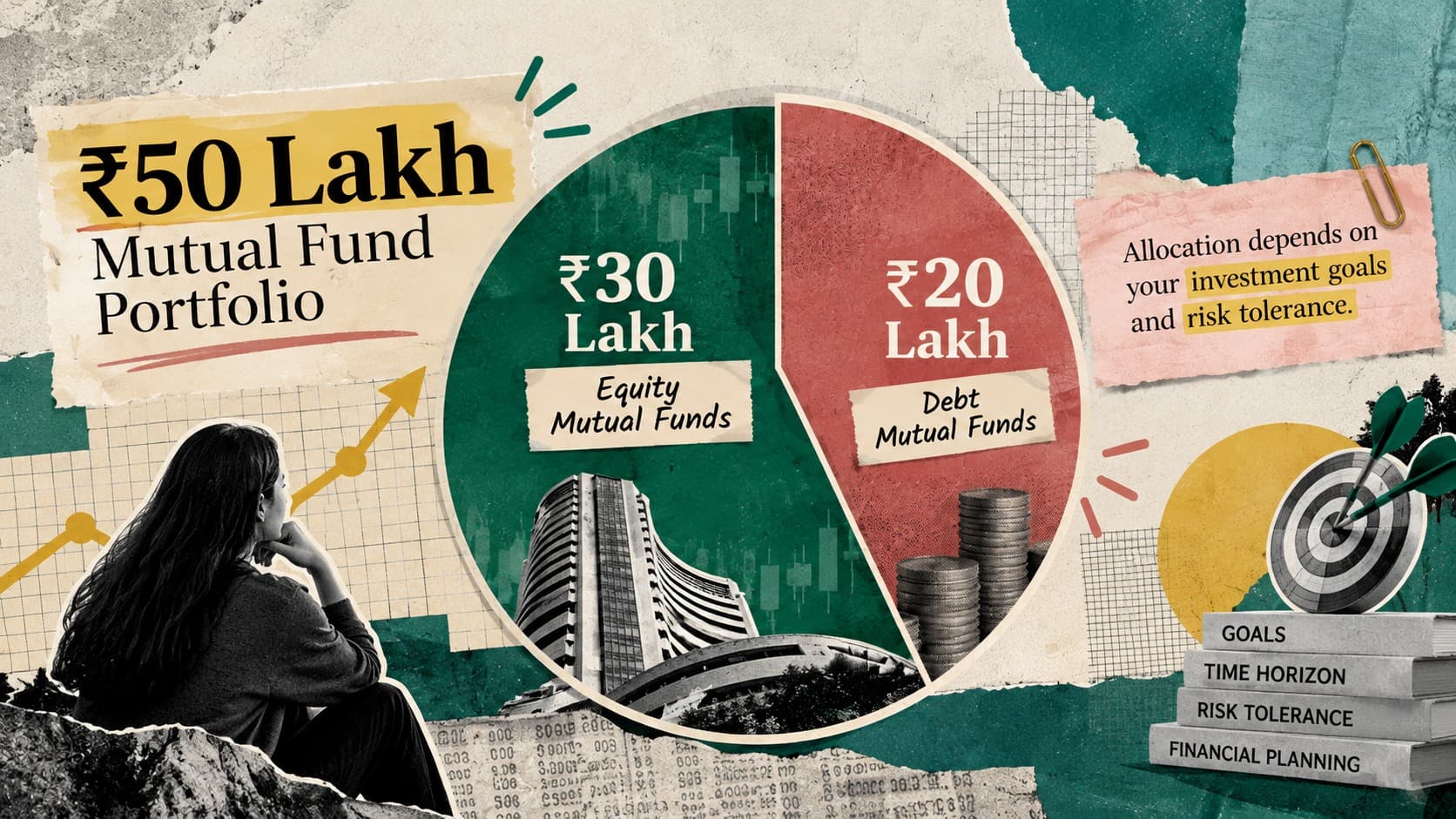
No single fund suits every SWP. The right mix depends on time horizon, income needs and risk tolerance.
Equity mutual funds invest mainly in shares. They may offer long-term growth potential, but can fall sharply and expose withdrawals to market volatility. Learn about Equity Mutual Funds.
Debt mutual funds invest mainly in fixed-income instruments. Their values can still be affected by interest-rate movements, credit quality and liquidity. Explore Debt Mutual Funds.
Hybrid mutual funds combine asset classes. Their risk depends on the scheme’s allocation and underlying holdings. See Hybrid Mutual Funds.
Some investors separate near-term withdrawals from longer-term growth, but this does not guarantee safety. Check holdings, costs and risk. Kuberzo’s Investment Risk Analyzer may help you think about risk comfort.
How Does Inflation Affect SWP Income?
A fixed ₹50,000 buys less as prices rise. Increasing withdrawals to maintain purchasing power means taking more from the portfolio.
If withdrawals rise by 3% annually, more money leaves the portfolio. Kuberzo’s Inflation Calculator illustrates how inflation changes future costs.
What About Tax and Other Costs?
Each SWP payment is generally processed as a redemption of mutual fund units. The tax treatment depends on factors such as the fund category, the holding period of the units redeemed and the tax rules applicable at that time. The entire withdrawal should not automatically be treated as taxable income, because a redemption can include both capital and gains; however, the exact tax calculation is situation-specific.
Some schemes may also impose an exit load when units are redeemed within a specified period. Review scheme documents and current Income Tax Department guidance before starting. Rules can change, so seek qualified tax advice for your circumstances.
A Practical Checklist Before Starting
Calculate your need. Separate essential expenses from discretionary spending.
Test the amount. Compare more than one return scenario.
Plan for weak markets. Consider how you would cover expenses after a decline.
Understand the fund. Check its objective, risk, costs and exit load.
Review annually. Compare the remaining corpus with future needs.
Keep records. Track redemptions and tax information.
A Portfolio Review can help structure a review of your holdings.
The Takeaway
Aarav’s SIP helped him build a corpus; an SWP may help him draw from it. The transition from accumulating wealth to using it requires a different mindset. The priority is balancing present income with the possibility that the money may need to last for many years.
Start with the income you actually need, test realistic scenarios, understand the risks and review the plan regularly. A regular withdrawal can make cash flow easier to organise, but it cannot turn mutual fund investments into guaranteed income.
Disclaimer: This article is for general educational purposes only and is not personalised investment advice. All figures are illustrative assumptions, not guaranteed returns. Mutual fund investments are subject to market risks. Read all scheme-related documents carefully before investing. Tax treatment depends on the applicable rules and individual circumstances.
Frequently Asked Questions
Is an SWP the Same as a Dividend?
No. An SWP is a withdrawal through redemption of units in an amount and at a frequency selected by the investor. A distribution under a mutual fund’s Income Distribution cum Capital Withdrawal option is determined by the fund and is not guaranteed.
Does an SWP Reduce My Investment?
Each payment redeems units. The portfolio can grow or decline depending on returns and withdrawals.
What Withdrawal Rate Is Safe?
There is no universal rate that is safe for everyone. Sustainability depends on the corpus, time horizon, return sequence, inflation, taxes and flexibility to adjust spending. Calculator results are scenarios, not guarantees.
Can I Start an SWP With a Smaller Corpus?
Yes, but a smaller corpus generally supports a smaller withdrawal if the money is to last for a comparable period. Use a calculator to test different scenarios, remembering that projections cannot guarantee future outcomes.