Exit Load in Mutual Funds: What It Is, How to Calculate & Avoid It
By Amrita Sinha
About the Author
Amrita Sinha is a content strategist with experience in SEO, digital marketing, and financial content. She writes easy-to-understand, research-backed articles on investing, personal finance, taxation, and wealth management for Kuberzo.
Understand exit load in mutual funds, how to calculate redemption charges, SIP exit load rules, and practical ways to avoid unnecessary fees.
Introduction
Investing in mutual funds involves more than choosing a fund and tracking its returns. Investors should also understand the charges that may apply when they withdraw their money. One such charge is the exit load.
Imagine your mutual fund investment has grown from ₹50,000 to ₹55,000. You decide to redeem your units, expecting to receive the full amount. However, if your scheme charges an exit load, a portion of your redemption proceeds may be deducted.
Understanding exit load in mutual funds can help you plan withdrawals better, avoid unnecessary charges, and make informed investment decisions. Whether you invest through a lump sum or a Systematic Investment Plan (SIP), knowing the applicable rules can make a difference to the amount you receive.
In this guide, we explain what exit load is, how to calculate it, when it applies, and how to minimise it when redeeming mutual fund investments.
What Is Exit Load in Mutual Funds?
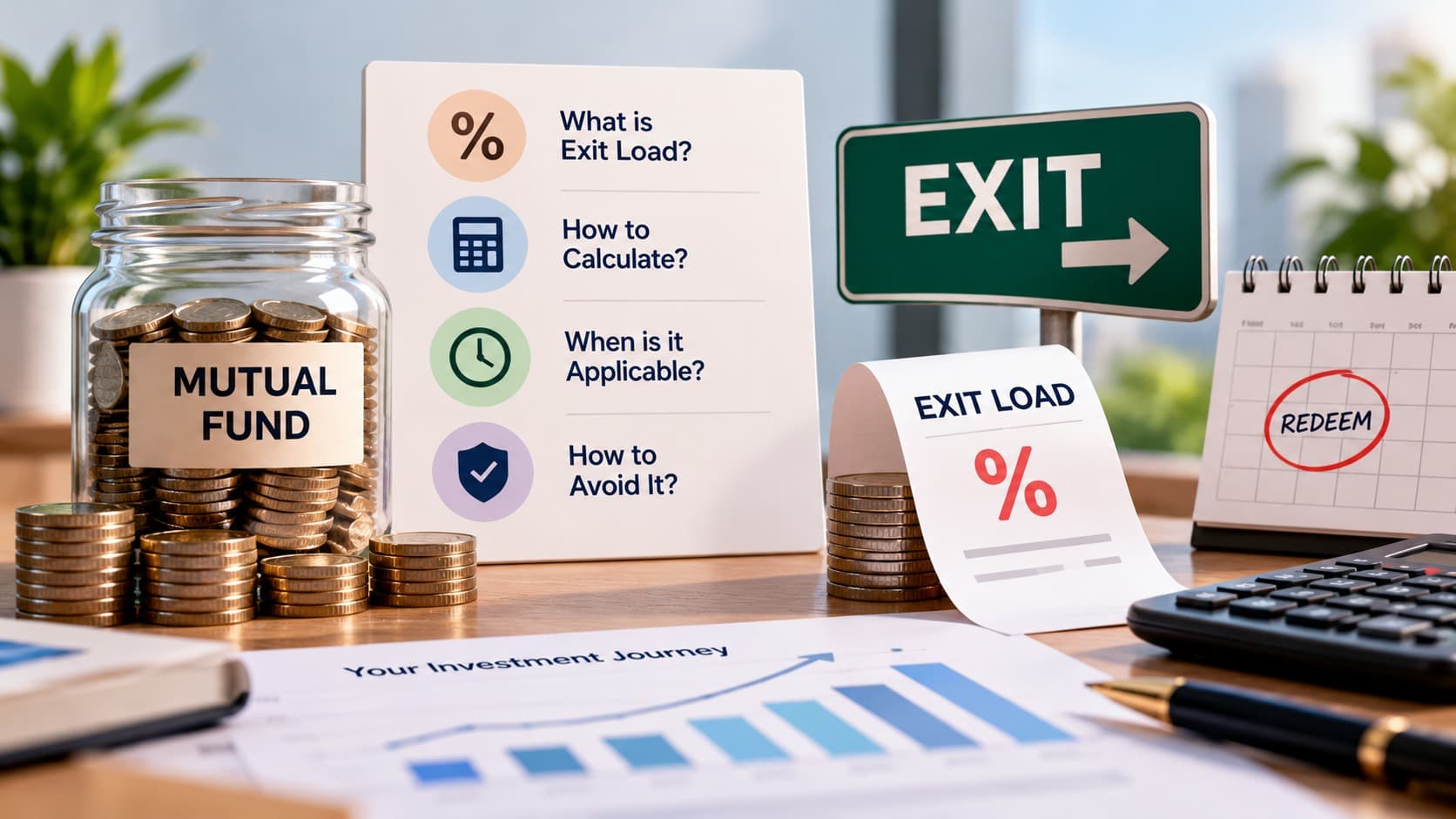
Exit load is a charge that a mutual fund scheme may impose when an investor redeems or switches out units within a specified period. It is generally calculated as a percentage of the applicable redemption value, according to the scheme's exit load structure.
The purpose of an exit load is to discourage premature withdrawals and frequent short-term trading. It may also help protect the interests of investors who remain invested in the scheme.
For example, a mutual fund may charge a 1% exit load if units are redeemed within one year of purchase. If you redeem eligible units before completing that period, the applicable charge will be deducted from your redemption proceeds.
However, not every mutual fund has the same exit load. The percentage, holding period and conditions vary by scheme. Some schemes may have no exit load, while others may apply different charges depending on when you withdraw.
When Is Exit Load Applicable?
Understanding when an exit load is applicable is important before placing a redemption request. The answer depends on the scheme's offer documents and the date on which the units were purchased.
Exit load may apply in the following situations:
Early redemption: You withdraw units before the specified exit load period ends.
Partial withdrawal: You redeem only a portion of your investment while some units remain invested.
Switching between schemes: You switch units from one scheme to another within the same mutual fund house. A switch-out may be treated as a redemption and can attract an exit load.
SIP withdrawals: You redeem recent SIP instalments before their applicable exit load periods have ended.
For instance, suppose a scheme charges a 1% exit load on units redeemed within 12 months. If you withdraw eligible units after six months, the charge may apply. If you redeem them after the applicable period has ended, the exit load may no longer apply.
Always check the scheme's latest Scheme Information Document (SID) or other official scheme disclosures. Do not assume that every equity, debt or hybrid fund follows the same exit load period.
How to Calculate Exit Load in Mutual Funds
Learning how to calculate exit load is straightforward once you know the redemption value and the applicable percentage.
The basic formula is:
Exit Load = Eligible Redemption Value × Exit Load Rate
Net Redemption Amount = Eligible Redemption Value − Exit Load
The eligible redemption value is the value of the units being redeemed that are subject to the charge.
Example: Calculating a 1% Exit Load
Suppose you invest ₹1,00,000 in a mutual fund. At the time of redemption, your investment is worth ₹1,10,000. The scheme charges a 1% exit load on eligible units redeemed within one year, and you redeem all your units within that period.
Redemption value: ₹1,10,000
Applicable exit load: 1%
Exit load amount: ₹1,10,000 × 1% = ₹1,100
Net redemption amount: ₹1,10,000 − ₹1,100 = ₹1,08,900
In this example, the exit load is ₹1,100, leaving you with ₹1,08,900 before considering any other applicable tax or transaction-related implications.
If the same units are redeemed after the specified exit load period ends, the exit load may be zero, provided no other applicable condition triggers a charge.
Important: The calculation above is illustrative. Actual redemption proceeds depend on the applicable NAV, the scheme's exit load terms, the units redeemed and the relevant dates.
Exit Load on SIP Instalments: How Does It Work?
One common misconception is that the exit load period for an SIP starts when you begin the SIP. In reality, exit load on SIP instalments is generally assessed separately for each instalment.
Every SIP instalment purchases units on a different date. Therefore, each instalment has its own holding period and may have a different exit load status when you redeem.
Consider this example:
You invest ₹5,000 every month in a mutual fund with a 1% exit load on units redeemed within one year. After several months, you decide to withdraw your investment.
Your oldest instalments may have completed the one-year holding period, while your more recent instalments may still fall within it. Depending on the scheme's rules and the units redeemed, the exit load may apply only to the eligible units that have not completed the specified period.
This is why investors should check the purchase dates of their units before redeeming an SIP investment. Simply counting one year from the date you started your SIP is not enough to determine whether an exit load applies.
Exit Load in Liquid Funds: Is It Applicable?
Liquid mutual funds are designed to provide access to money over short periods, but they are not automatically free from exit loads.
The exit load in liquid funds depends on the scheme's applicable terms and the timing of redemption. Some liquid funds may have a graded exit load for redemptions during a short initial period, while others may have different structures.
Before investing, check the scheme's current exit load schedule, including any day-wise charges. Do not assume that a liquid fund has zero exit load simply because it is intended for short-term cash management.
Also remember that a liquid fund is not the same as a savings account or a guaranteed-return product. Its NAV can fluctuate, and redemption proceeds are subject to the scheme's terms and applicable processing timelines.
Zero Exit Load Mutual Funds: What Should You Know?
Zero exit load mutual funds are schemes, or investments under particular scheme conditions, where no exit load is charged on the relevant redemption.
These may include funds that do not impose an exit load or units redeemed after the applicable exit load period has ended. However, the absence of an exit load does not mean that the investment has no costs or risks.
For example, a fund may not charge an exit load but may still carry an expense ratio. Tax may also apply to capital gains, depending on the fund category, holding period and prevailing tax rules.
When comparing funds, consider the investment objective, risk level, costs, liquidity and historical performance alongside exit load. A fund with no exit load is not automatically the best choice for every investor.
How to Avoid Exit Load on Partial Withdrawal
If you need to access some of your money without redeeming your entire investment, avoiding exit load on partial withdrawal starts with checking which units are eligible for redemption. Before redeeming your investment, assess your investment risk profile and ensure the fund still aligns with your financial needs.
Here are some practical steps:
1. Check the holding period of your units
Review the purchase dates and the exit load conditions for the units you plan to redeem. If the withdrawal is not urgent, waiting until the applicable period ends may help you avoid the charge.
2. Redeem only what you need
A partial withdrawal may reduce the number of units redeemed, but it does not automatically eliminate exit load. If the units you withdraw are still within the chargeable period, a fee may apply.
3. Understand how units are selected
For multiple purchases in the same scheme and folio, redemption is generally processed using the first-in, first-out (FIFO) method, subject to the applicable rules. This means older units are typically treated as redeemed first. Check your transaction statement and the scheme's redemption rules to understand which units will be affected.
4. Review the exit load before confirming
Check the estimated redemption amount and applicable charges on the fund house's platform or through your investment service provider before submitting the request.
5. Plan withdrawals around your financial goals
If you expect to need money soon, consider your liquidity needs before investing in a scheme with an exit load period. An investment should match your time horizon and risk tolerance, rather than being selected solely because it has a low or zero exit load.
Avoid delaying an essential withdrawal solely to save on a fee if doing so would create a more significant financial problem. Compare the cost with your immediate needs before deciding.
Common Mistakes to Avoid
Investors can reduce surprises by avoiding a few common mistakes:
Assuming every mutual fund has the same exit load.
Believing the exit load period for an SIP starts with the first instalment.
Thinking that partial withdrawals are always exempt from charges.
Assuming a switch between schemes is necessarily free.
Confusing exit load with capital gains tax or the expense ratio.
Relying on outdated exit load details instead of the current scheme disclosures.
Exit load is only one part of the cost of investing. Understanding the other charges and tax implications can help you estimate your actual proceeds more accurately. A periodic mutual fund portfolio review can help you evaluate your investments, understand their costs and check whether they continue to meet your financial goals.
Conclusion
Exit load in mutual funds is a charge that may apply when you redeem or switch out units within a scheme's specified period. Its percentage and applicability depend on the individual scheme and the units being redeemed.
Before withdrawing money, check the holding period, calculate the possible charge, and understand how SIP instalments and partial redemptions are treated. If your withdrawal is flexible, waiting until the relevant exit load period ends may help you avoid unnecessary costs.
Most importantly, do not choose a mutual fund based only on its exit load. Consider its suitability for your financial goals, risk tolerance, liquidity requirements and overall cost structure.
For more information, refer to the scheme's official documents and use this Kuberzo exit load guide as a starting point for understanding redemption charges before making an investment decision.
A goal-based financial plan can help you align your investments with your time horizon and expected cash needs.
Frequently Asked Questions
What is exit load in mutual funds?
An exit load is a charge that a mutual fund scheme may impose when investors redeem or switch out units within a specified period. The percentage and applicable period vary by scheme.
How to calculate exit load on a mutual fund redemption?
Multiply the eligible redemption value by the applicable exit load percentage. Subtract the resulting charge from the eligible redemption value to estimate the net proceeds before other applicable deductions.
Does exit load apply to every SIP instalment?
Each SIP instalment generally has its own purchase date and holding period. Consequently, some instalments may attract an exit load while others may have completed the applicable period.
Are there zero exit load mutual funds?
Yes, some schemes or redemptions under specific conditions may not attract an exit load. However, investors should verify the latest scheme documents and remember that other costs and taxes may still apply.