The 50-30-20 Budget Rule Explained
By Dwarika Verma
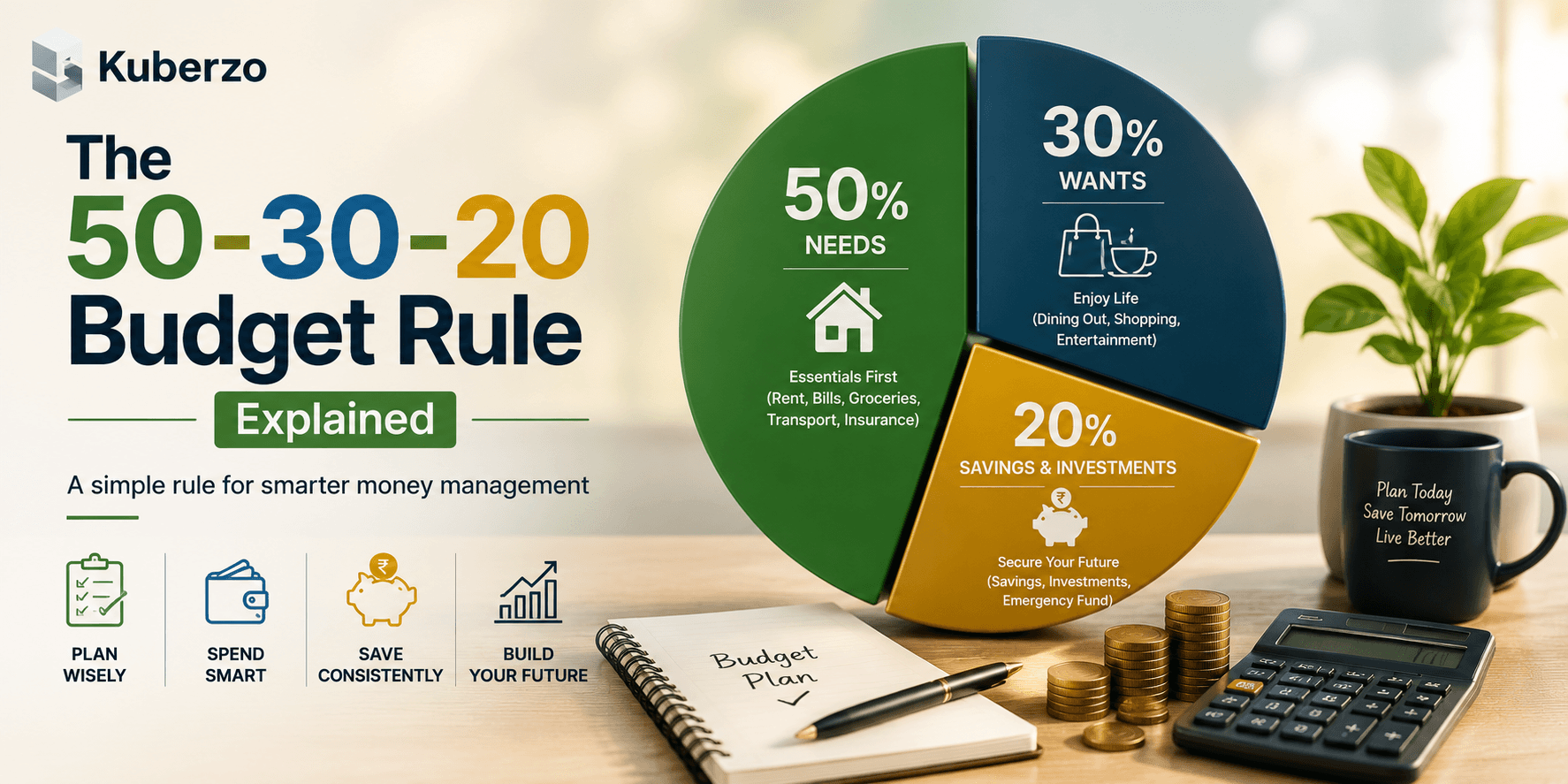
Learn how the 50-30-20 budget rule can help you manage your monthly income. Discover a simple budgeting method that balances essential expenses, lifestyle spending, and long-term savings.
A Simple Way to Manage Your Money Every Month
Managing money doesn't have to be complicated. Many people struggle with budgeting because they don't know where to start. One of the easiest and most effective budgeting methods is the 50-30-20 budget rule. It provides a simple framework for dividing your monthly income, helping you cover your expenses while saving for the future.
Whether you're a student, a salaried employee, or someone starting their financial journey, this rule can help you build better money habits.
What Is the 50-30-20 Budget Rule?
The 50-30-20 rule suggests dividing your monthly income into three categories:
- 50% for Needs
- 30% for Wants
- 20% for Savings and Investments
This method helps you maintain a balance between your daily expenses, lifestyle choices, and long-term financial goals. Instead of tracking every rupee you spend, you simply focus on keeping your expenses within these three categories.
Spend 50% on Your Needs
Needs are the essential expenses you cannot avoid. These include house rent, groceries, electricity bills, transportation, insurance premiums, and other basic living costs.
The idea is to keep these necessary expenses within half of your monthly income. If your essential expenses are taking up much more than 50%, it may be worth reviewing your spending and finding ways to reduce unnecessary costs.
Use 30% for Your Wants
Wants are the things that improve your lifestyle but aren't essential. This includes dining out, shopping, entertainment, vacations, streaming subscriptions, or buying the latest gadgets.
Spending on yourself is important, but it's equally important to stay within your budget. Following the 30% guideline allows you to enjoy life without affecting your financial stability.
Save and Invest the Remaining 20%
The final 20% should go towards your future. This includes building an emergency fund, investing in mutual funds through SIPs, contributing to retirement plans, or repaying high-interest debt.
Regular savings and investments help create financial security over time. Even if you start with small amounts, consistency can make a significant difference in achieving your long-term goals.
Is the 50-30-20 Rule Right for Everyone?
The 50-30-20 rule is a great starting point, but it doesn't have to be followed exactly. Everyone's financial situation is different. Someone living in a city with high living costs may spend more than 50% on essential expenses, while others may choose to save more than 20%.
The goal is not to stick to fixed percentages but to develop a habit of budgeting and making conscious financial decisions.
Conclusion
The 50-30-20 budget rule is a simple and practical way to manage your monthly income. By dividing your money between needs, wants, and savings, you can avoid overspending while building a stronger financial future.
Remember, successful money management isn't about earning a huge salary, it's about using your income wisely. A realistic budget, combined with regular saving and disciplined investing, can help you achieve your financial goals with confidence.
To begin your financial journey with expert guidance, contact us!
Frequently Asked Questions
What is the 50-30-20 budget rule?
The 50-30-20 budget rule is a simple budgeting method that recommends allocating 50% of your income to essential needs, 30% to wants, and 20% to savings and debt repayment. It helps create a balanced and sustainable financial plan.
How does the 50-30-20 budget rule work?
Under this rule, 50% of your income covers necessities like rent, groceries, and utilities, 30% is reserved for discretionary spending such as entertainment and dining out, and 20% is dedicated to savings, investments, or paying off debt.
Is the 50-30-20 budget rule suitable for everyone?
The rule works well for many people, but it may need adjustments based on income, location, financial goals, or existing debt. The percentages can be modified to better suit individual circumstances while maintaining disciplined money management.
Can the 50-30-20 budget rule help me save more money?
Yes. By setting aside 20% of your income for savings and investments, the rule encourages consistent saving, helps build an emergency fund, and supports long-term financial goals such as buying a home or planning for retirement.
What expenses are included in the 50%, 30%, and 20% categories?
The 50% category includes essential expenses like housing, food, transportation, and utilities. The 30% category covers non-essential spending such as travel, shopping, and entertainment. The remaining 20% goes toward savings, investments, and debt repayment.
Can I use the 50-30-20 budget rule if I have a low income?
Yes. Even if your income is limited, the 50-30-20 rule can serve as a budgeting guideline. You may need to adjust the percentages temporarily, but the goal is to prioritize essential expenses while gradually increasing savings whenever possible.