Understanding Risk Appetite: Choosing Investments That Match Your Financial Goals
By Dwarika Verma
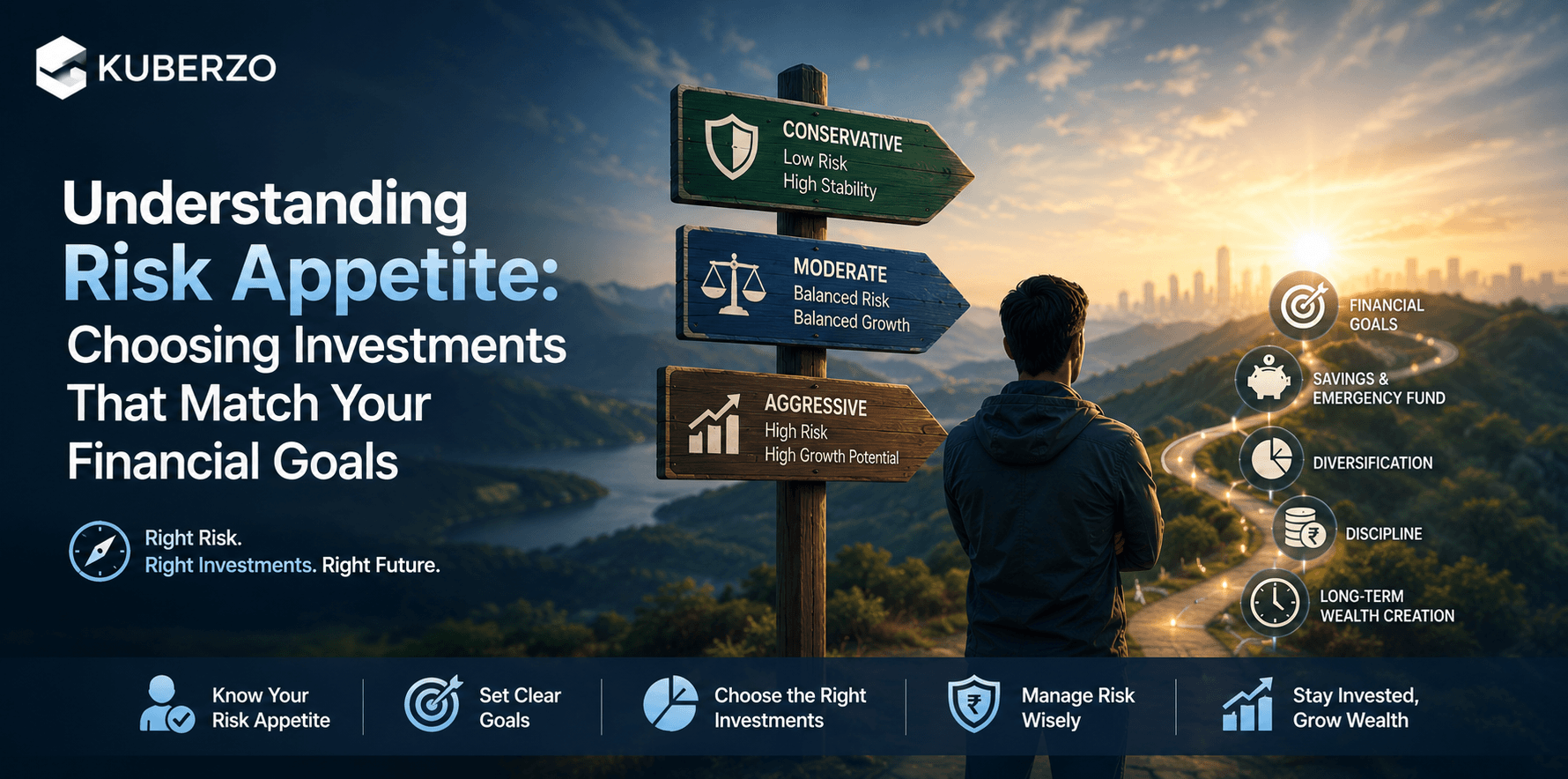
Learn how risk tolerance influences investment decisions and why it plays a crucial role in long-term wealth creation.
When it comes to investing, one size does not fit all. Investors often ask questions like, "Which investment gives the highest returns?" or "Which mutual fund is performing the best?"
However, successful investing is not just about chasing high returns. The best investment is one that matches your financial goals, investment horizon, and comfort with risk. This is where understanding your risk appetite becomes important.
Two people with the same amount of money may choose completely different investments, and both decisions can be correct. The difference lies in their willingness and ability to take risk.
What Is Risk Appetite?
Risk appetite refers to the amount of risk an investor is willing and able to take in pursuit of returns. While some investors are comfortable with market fluctuations and short-term losses, many investors prefer stability and predictability.
A smart investor must understand his risk appetite before taking an investment decision.
Every investment carries some level of risk. Generally, investments with higher return potential also come with higher risk. On the other hand, lower-risk investments may offer more stability but comparatively lower returns.
Some investors are comfortable seeing their portfolio fluctuate during market ups and downs, while others prefer investments that provide greater stability and peace of mind.
Understanding your risk appetite helps you choose investments that suit your financial situation and personality.
Why Risk Appetite Matters
Many investors make the mistake of investing based on market trends, social media advice, or recommendations from friends and relatives.
However, an investment that works for someone else may not be suitable for you.
If you invest in a high-risk product without being mentally prepared for market volatility, you may panic and sell your investments during a downturn. Similarly, being too cautious may prevent your money from growing enough to achieve long-term financial goals.
Matching investments with your risk appetite helps you stay invested and make better financial decisions over time.
The Three Types of Investors
Usually, investors are categorized into three types based on their risk appetite:
1. Conservative Investors
These investors prioritize capital protection over high returns and generally prefer investments that offer stability and lower risk.
Examples include fixed deposits, debt mutual funds, government securities.
2. Moderate Investors
These investors seek a balance between growth and safety, that is, they are willing to take some risk but do not want excessive market volatility.
Examples include hybrid mutual funds, balanced advantage mutual funds, diversified mutual funds.
3. Aggressive Investors
These investors focus on long-term wealth creation and are comfortable with significant market fluctuations.
Examples include equity mutual funds, small-cap funds, sectoral funds.
What Determines Your Risk Appetite?
Several factors influence how much risk you can comfortably take.
Age and Investment Horizon
Younger investors generally have a longer investment horizon, allowing them more time to recover from market fluctuations. Someone investing for retirement 25 years away may be able to take more risk than a person retiring in the next few years.
Financial Goals
The financial goals you set play a major role in determining risk levels.
For example, money needed for a home purchase in two years may require a different investment strategy than money being invested for retirement after twenty years.
Income Stability
People with stable income sources may be more comfortable taking investment risks compared to those with uncertain earnings.
Emergency Savings
Having an emergency fund provides financial security and may allow investors to take calculated investment risks without worrying about unexpected expenses.
Personal Comfort Level
Risk appetite is not only about numbers. It is also about emotions. If market fluctuations cause significant stress or sleepless nights, you may need a more conservative investment approach.
Aligning Investments with Your Goals
The purpose of investing is not to copy someone else's portfolio. It is to build a portfolio that supports your own financial journey.
Before making investment decisions, evaluate your financial goals, time horizon, income stability, and comfort with risk. A well-balanced investment strategy can help you remain disciplined during market ups and downs.
Conclusion
Understanding your risk appetite is one of the most important steps in investing. It helps you choose investments that match your financial goals while reducing the chances of making emotional decisions during market fluctuations.
Whether you are a conservative, moderate, or aggressive investor, there is no universally "best" investment. The right investment is the one that fits your goals, financial situation, and risk tolerance.
By aligning your investments with your risk appetite, you can build a portfolio that supports long-term wealth creation while giving you confidence throughout your investment journey.
If you are an investor looking for assessing your risk appetite, use our risk analyzer tool and seek expert guidance.
Frequently Asked Questions
What is risk appetite in investing?
Risk appetite is the level of risk an investor is willing and able to take in pursuit of investment returns. It balances your financial goals and investment horizon with your emotional comfort level regarding market fluctuations and the potential for short-term losses.
Why should I assess my risk appetite before investing?
Assessing your risk appetite prevents you from making emotional decisions based on market trends or advice from others. It helps you choose investments that align with your personality and financial situation, ensuring you stay disciplined and invested even during market downturns.
What are the three main types of investors based on risk appetite?
Investors are generally categorized as: Conservative: Prioritize capital protection and stability (e.g., fixed deposits, debt funds). Moderate: Seek a balance between growth and safety (e.g., hybrid or balanced mutual funds). Aggressive: Focus on long-term wealth creation and are comfortable with market volatility (e.g., equity or small-cap funds).
How do age and investment horizon impact my risk appetite?
Generally, younger investors with a longer investment horizon can afford more risk because they have more time to recover from market fluctuations. Those closer to their financial goals, such as retirement, often need a more conservative approach to protect their accumulated capital.
Does having an emergency fund affect my investment risk?
Yes. Having a dedicated emergency fund provides financial security, which may allow you to take more calculated risks with your remaining investments without the fear of being forced to liquidate assets during an unexpected expense.
Can my risk appetite change over time?
Yes, your risk appetite is influenced by changing factors such as your income stability, proximity to financial goals, and personal comfort level. It is important to re-evaluate your risk profile periodically to ensure your investment strategy continues to support your current financial needs.