Understanding Risk and Return in Investing: A Beginner's Guide
By Shruti Agrawal
This blog explains that Every investment involves a balance between risk and return. This beginner-friendly guide explains how risk affects your investments, the difference between risk and return, how mutual funds fit into an investment strategy, and practical risk management tips to help you make informed financial decisions and build long-term wealth.
Understanding Risk and Return in Investing: A Beginner's Guide
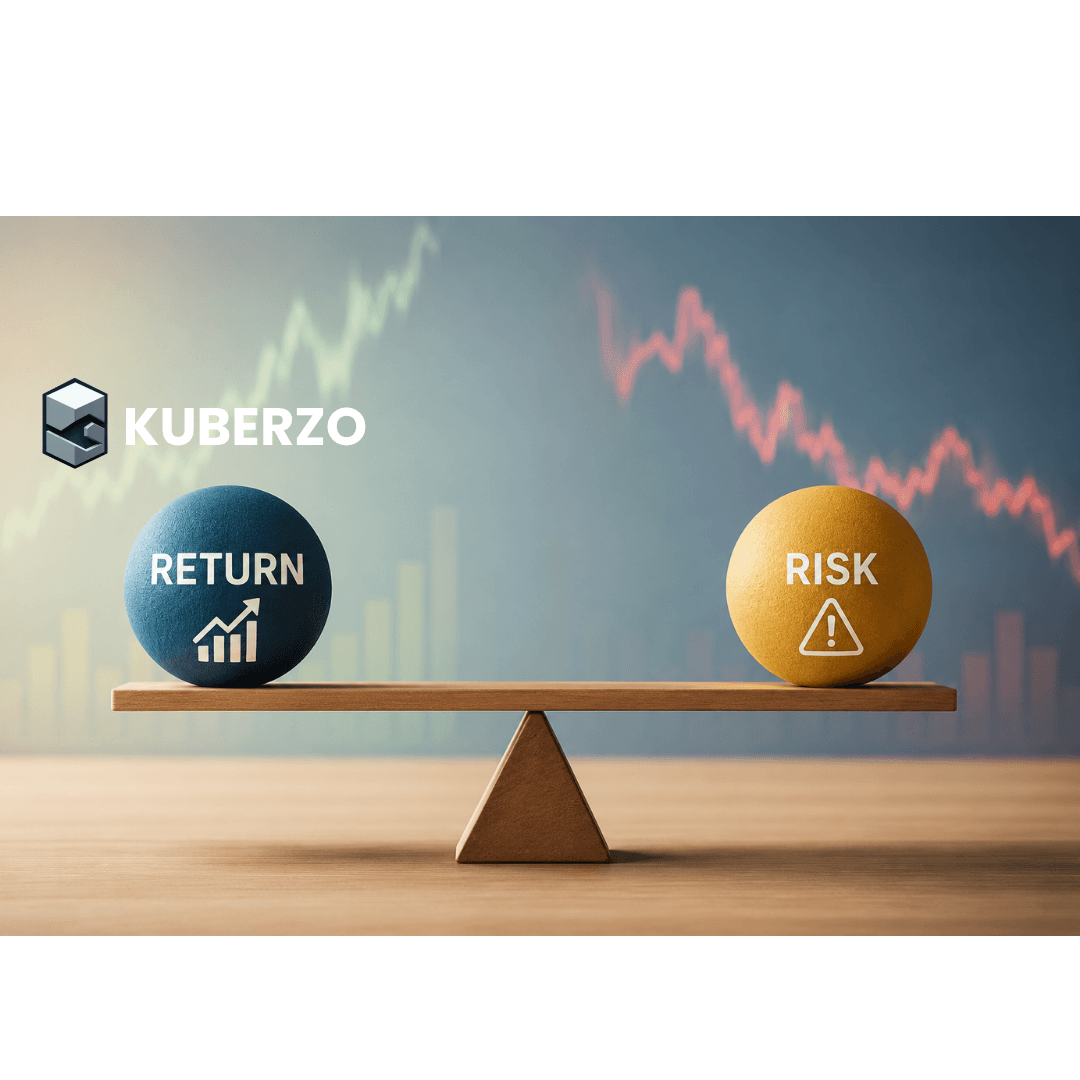
Every investment decision comes with one simple truth: higher potential returns usually involve higher risk. Whether you're exploring mutual funds, stocks, or fixed-income options, understanding the relationship between risk and return is the foundation of smart investing.
If you're investing money for beginners, this guide will help you understand how risk works, what kind of returns you can expect, and how to build a balanced investment strategy.
What is Risk in Investing?
Risk in investing refers to the possibility that your investment may not deliver the expected return on investment or could even lose value. Every financial product carries some level of uncertainty, and understanding these risks helps you make informed decisions.
Some common types of financial risk include:
- Market Risk: The possibility of losing money due to fluctuations in the stock or bond markets.
- Business Risk: The risk that a company may perform poorly because of internal challenges, competition, or economic conditions.
- Interest Rate Risk: Changes in interest rates can affect the value of certain investments, especially debt instruments.
- Inflation Risk: When inflation rises faster than your investment grows, your purchasing power decreases.
While risk cannot be eliminated completely, it can be managed with the right risk management techniques.
What Does Return Mean?
A return on investment is the profit or income you earn from an investment over a specific period. Returns may come from capital appreciation, dividends, or interest earned.
For example, if you invest ₹10,000 and its value grows to ₹11,000 after one year, your return on investment is 10%.
Different investment options offer different levels of returns. Some provide stable but lower returns, while others have the potential for higher gains with increased risk.
The Difference Between Risk and Return
Understanding the difference between risk and return is essential before making any investment decision.
- Risk is the chance of losing money or earning less than expected.
- Return is the reward you receive for taking that risk.
Generally, investments with lower risk tend to offer modest returns, while high yield investments often involve greater uncertainty.
For example:
- Savings accounts generally offer some of the best interest rates among low-risk options, but the returns are relatively modest.
- Mutual funds can provide higher growth potential, depending on the type of fund, but they are subject to market movements.
- Equity investments may generate strong long-term returns but also experience significant short-term fluctuations.
Finding the right balance between risk and return is the key to successful investing.
Understanding Return on Mutual Funds
The return on mutual funds depends on the performance of the underlying securities in which the fund invests. Equity mutual funds generally carry higher market risk but may generate better long-term returns. Debt mutual funds usually involve lower risk and comparatively stable returns.
It's important to remember that past performance does not guarantee future returns. Instead of focusing only on historical performance, investors should evaluate the fund's objective, investment strategy, expense ratio, and risk profile. Understand
Investing for Beginners: How to Manage Risk
If you're investing for beginners, don't let the word "risk" discourage you. Instead, learn how to manage it wisely.
Here are a few practical tips:
- Diversify your investments: Spread your money across different asset classes instead of relying on a single investment.
- Invest according to your goals: Your investment strategy should match your financial objectives and time horizon.
- Start with Mutual Funds: They offer professional management and diversification, making them suitable for many first-time investors.
- Invest regularly: Systematic investing through SIPs can reduce the impact of market volatility over time. Calculate SIP
- Review your portfolio periodically: Regular monitoring helps ensure your investments remain aligned with your goals.
These simple risk management practices can help reduce uncertainty while improving your long-term investment experience.
Building a Smart Investment Strategy
A successful investment strategy isn't about chasing the highest returns. It's about finding investments that match your financial goals, risk tolerance, and investment horizon.
Before investing, ask yourself:
- What am I investing for? Know your goal
- How much risk am I comfortable taking?
- How long can I stay invested?
- Do I need stable income or long-term wealth creation?
Your answers will guide you toward investment options that suit your needs rather than following market trends blindly.
Final Thoughts
Understanding risk and return is one of the most valuable lessons every investor should learn. Every investment carries some level of financial risk, but with the right knowledge, diversification, and disciplined planning, you can make smarter financial decisions.
Whether you're exploring mutual funds, looking for high yield investments, or simply investing money for beginners, remember that successful investing is a long-term journey. Focus on building a well-balanced portfolio, managing risk effectively, and staying committed to your financial goals rather than chasing quick returns.
Frequently Asked Questions
What is the relationship between risk and return in investing?
Risk and return are closely related in investing. Generally, investments with higher potential returns involve higher levels of risk, while lower-risk investments usually offer more modest returns. Finding the right balance depends on your financial goals and risk tolerance.
What are the main types of investment risk?
The most common types of investment risk include market risk, business risk, interest rate risk, and inflation risk. Understanding these risks helps investors choose suitable investments and build a well-diversified portfolio.
How can beginners manage investment risk?
Beginners can manage investment risk by diversifying their portfolio, investing through SIPs, choosing investments that match their financial goals, reviewing their portfolio regularly, and avoiding emotional investment decisions.
Are mutual funds a good option for managing risk?
Yes. Mutual funds offer professional management and diversification by investing in multiple securities. While they are subject to market risks, they can help reduce the impact of investing in a single stock or asset.
Can high-return investments be risk-free?
No. There is no investment that offers high returns without risk. Investments with the potential for higher returns, such as equities, generally carry greater market risk than lower-risk options like fixed-income investments.
How do I choose investments based on my risk tolerance?
Start by evaluating your financial goals, investment horizon, income stability, and comfort with market fluctuations. Investors with a higher risk tolerance may choose more equity investments, while conservative investors often prefer debt-oriented options.
Why is understanding risk and return important before investing?
Understanding risk and return helps investors set realistic expectations, choose suitable investment products, avoid unnecessary risks, and build a long-term investment strategy that aligns with their financial goals and wealth creation objectives.