Inflation vs Compounding: Which Is More Powerful?
By Anand
About the Author
Anand contributes to finance and personal finance content, with a particular interest in mutual funds, SIPs, financial planning and wealth creation. His work explores investment concepts and emerging trends in personal finance.

Understanding how rising prices can affect your wealth and how long-term growth can help protect your financial future
When people think about building wealth, they often focus on how much their investments can grow. But there is another force working in the opposite direction: inflation.
Over time, the cost of goods and services generally increases, which means the same amount of money may buy less in the future. At the same time, disciplined investing can allow your money to grow through the power of compounding.
So, which is more powerful—rising prices or the ability of money to grow over time?
The answer depends on how you manage your finances and how long you remain invested.
What Is Inflation?
Inflation refers to the increase in the overall prices of goods and services over time. When prices rise, the purchasing power of money decreases.
For example, ₹1,00,000 today may be able to purchase considerably more than ₹1,00,000 several years from now.
The inflation rate therefore becomes an important factor when planning for long-term goals such as retirement, education, or buying a home.
If your money grows at a rate lower than inflation, your wealth may increase in terms of rupees but lose purchasing power in real terms.
What Is the Power of Compounding?
Compounding allows your investment returns to generate additional returns over time.
Suppose you invest money and earn returns on it. If those returns remain invested, future growth can happen on both your original investment and the accumulated returns.
Inflation and Compounding Work in Opposite Directions
You can think of the relationship this way:
Inflation reduces purchasing power, while compounding can increase the value of your invested money.
For example, imagine your investments grow at an average annual rate of 10%, while prices increase by 6% annually. Your money may be growing faster than the general increase in prices.
However, if your investment returns are consistently below inflation, your real purchasing power could decline.
This is why simply saving money may not always be enough for long-term wealth creation.
Why Long-Term Investing Matters
Short-term market movements can make investing feel uncertain. But long-term investing gives your money more time to potentially benefit from compounding.
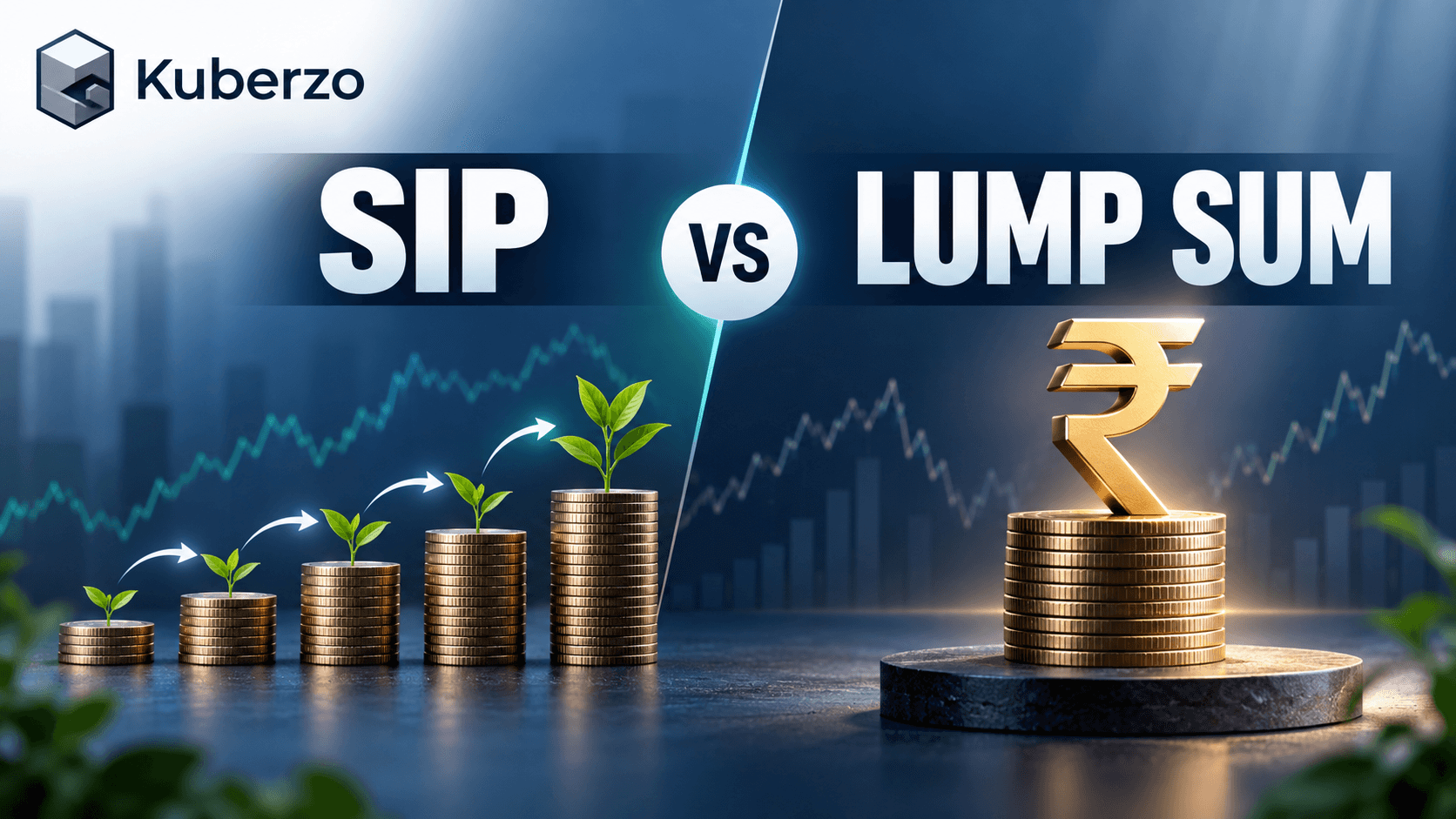
Investors using SIP investment can contribute a fixed amount regularly instead of trying to invest a large amount at once.
Regular investing can also help develop financial discipline and keep investors focused on their long-term objectives.
How Mutual Funds Can Help
Mutual funds provide investors with access to professionally managed portfolios containing different securities.
Depending on the fund category and the investor's objective, they may be used as part of a long-term investment strategy.
However, market-linked investments carry risk, and returns are not guaranteed. Investors should choose investments based on their goals, time horizon, and risk tolerance rather than assuming that past performance will continue.
Inflation Should Be Included in Financial Planning
When calculating how much money you may need in the future, it is important to consider rising costs.
For example, if you currently need ₹50,000 per month for your lifestyle, you should not assume that the same amount will be sufficient decades from now.
This is where proper financial planning becomes important.
A inflation calculator can help you understand how today's expenses could change over time based on an assumed inflation rate.
Don't Focus Only on Investment Returns
A common mistake is looking only at the percentage return generated by an investment.
Instead, consider the return after accounting for inflation.
For example, an investment earning 8% when inflation is 6% has a very different impact on purchasing power than an investment earning 12% when inflation is 4%.
Understanding real growth can give you a more realistic picture of your financial progress.
Start Early Rather Than Waiting
One of the biggest advantages available to young investors is time.
Starting with a manageable amount and remaining consistent can give compounding many years to work. Waiting several years before starting may require significantly larger contributions later to reach the same financial target.
You can also use a compounding calculator to experiment with different investment amounts, expected rates of return, and time periods.
This can make the impact of time and investment growth easier to understand.
So, Which Is More Powerful?
Inflation is powerful because it gradually reduces the purchasing power of idle money.
Compounding is powerful because it can turn consistent investments into significantly larger amounts over long periods.
The goal isn't to eliminate inflation. That's not possible for an individual investor.
Instead, the objective is to build an investment strategy that has the potential to generate returns that stay ahead of inflation over the long term while keeping risk appropriate for your situation.
Conclusion
Inflation and compounding are two forces every long-term investor should understand.
Inflation reminds us that the value of money changes over time, while compounding demonstrates how patience and consistency can potentially increase wealth.
The key is to start early, invest consistently, understand your risk, and review your financial goals regularly.
Don't simply ask, "How much money will my investment become?"
Also ask:
"What will that money actually be worth in the future?"
That perspective can help you make smarter long-term financial decisions.
To know more about financial planning and seek personalized financial guidance, visit Kuberzo and explore our smart investment tools.
Frequently Asked Questions
Is compounding stronger than inflation?
Neither is universally stronger. The important factor is whether your investments can generate returns that exceed the rate at which prices are rising over your investment horizon.
Why is inflation important for investors?
Because rising prices can reduce the future purchasing power of your money and affect the amount you need for future financial goals.
Does SIP protect against inflation?
A SIP does not guarantee protection against inflation. It is simply a disciplined way of investing regularly. The underlying investment determines the potential return and associated risk.
How can I calculate the future value of my money?
You can use an inflation calculator to estimate future expenses and a compounding calculator to estimate potential investment growth.
Is long-term investing better than short-term investing?
The appropriate investment horizon depends on your financial goal and risk profile. Longer periods can provide more opportunity for compounding, but market-linked investments still carry risk.