How Inflation Reduces the Value of Your Savings
By Dwarika Verma
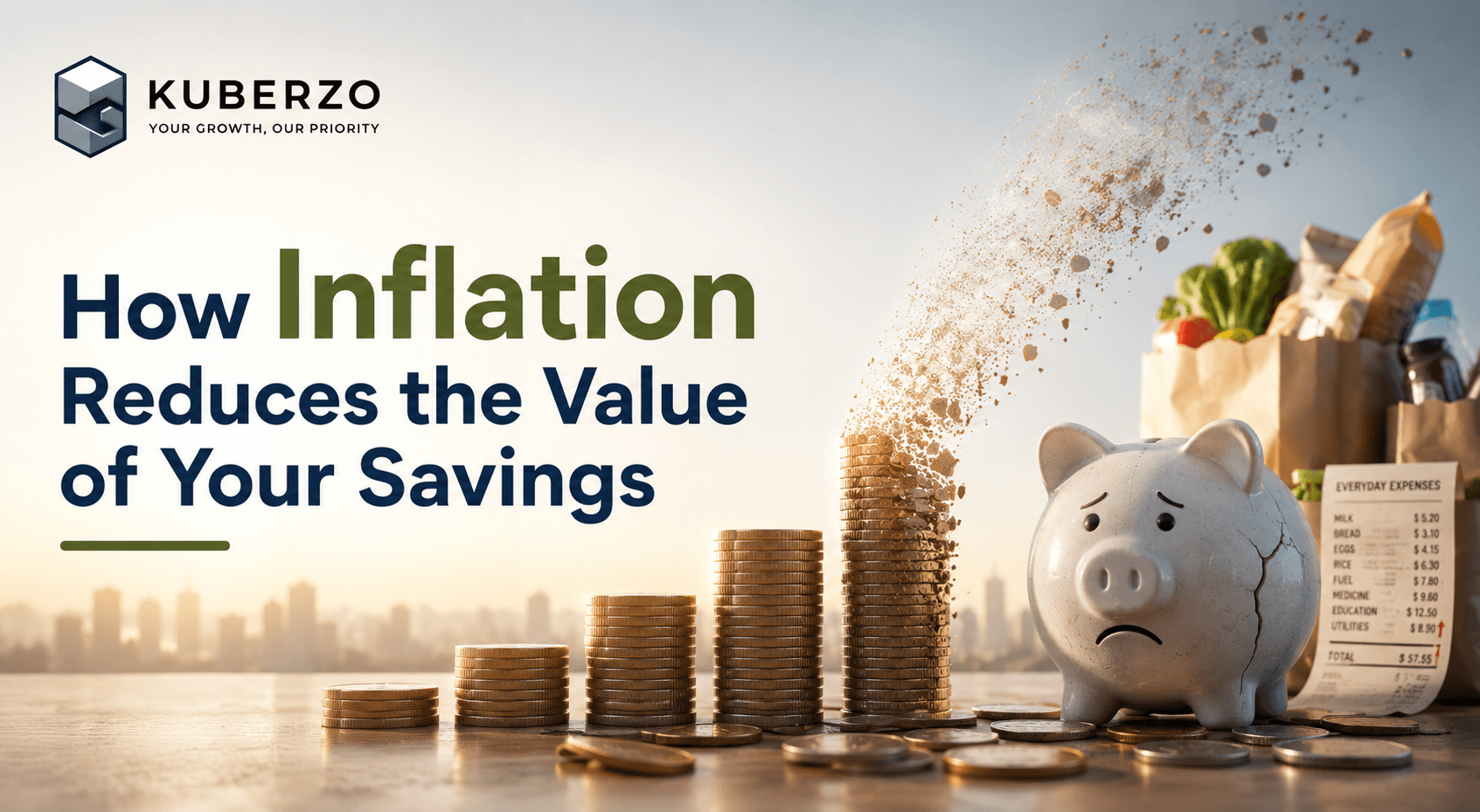
This article explains how inflation can impact an investor's personal finances and diminish the value of their savings. It also unveils how a disciplined investing approach can help an investor beat inflation.
You must have heard about "inflation" numerous times every day. But do you know what exactly it means? How it impacts our current lifestyle and our future?
Most people focus on how much they save, but few consider how inflation affects the value of those savings over time. As a beginner investor, inflation can both directly and indirectly influence your investments and savings. Therefore, it becomes necessary to understand what it actually means and why it matters.
What Is Inflation and Why Does It Matter?
Inflation refers to the gradual increase in the prices of goods and services, which reduces the purchasing power of money. In simple terms, the same amount of money buys fewer goods and services as prices rise. What you could buy ten years back with ₹100, you cannot buy the same today. Similarly, the same ₹100 today buys more than ₹100 ten years later.
Inflation is a natural part of the economy. As your cost-of-living increases, expenses such as food, housing, healthcare, education, and transportation become more expensive. While moderate inflation is considered normal, it can significantly impact your personal finances if your savings do not grow at the same pace as the inflation.
How Inflation Reduces the Value of Your Savings
You might wonder that the savings in your bank account are enough to secure your financial future. But this might not be true if the return you earn on those savings is lower than the inflation rate. This is so because the real value of money declines over time.
For instance, if a savings account offers an annual return of 4% while inflation rises by 6%, the purchasing power of those savings effectively decreases. Although the account balance may appear larger, the money may buy fewer goods and services than before.
As a saver, this hidden erosion of your purchasing power can be your biggest enemy, which may make an act of simple saving insufficient to achieve your long-term financial goals.
Why Investing is Important to Beat Inflation?
Investing is one of the most effective ways to combat inflation. This is so because, investments generate returns which have the potential to overcome inflation, helping you preserve and grow your wealth.
Long-term investing allows money to benefit from market growth and compounding. Rather than keeping your funds idle, you can invest them to create opportunities for wealth creation while protecting your purchasing power.
The earlier you invest, the more time your investments have to grow and potentially overcome the effects of inflation.
Role of Mutual Funds in Wealth Creation
Mutual funds are one of the most popular investment options today. By pooling money from multiple investors, mutual funds invest across a variety of securities, helping reduce concentration risk. For individuals seeking professional management and portfolio diversification, mutual funds are the best choice.
Mutual Fund Systematic Investment Plans (SIPs) at the same time, provide you enough room to invest a fixed amount regularly, encouraging disciplined investing habits. Over the long term, equity-oriented mutual funds have proved to be one of the most potential ways to generate inflation-beating returns.
For individuals seeking wealth creation in the long run, mutual funds can play an important role in your long-term investment strategy.
Long-Term Growth and Inflation-Resistant Wealth Management
The share market has long been associated with wealth creation. By investing in companies with strong growth potential, you can participate in the growth of businesses and the broader economy.
Although stock trading and share market movements can experience short-term volatility, long-term investors often focus on their financial goals rather than daily market fluctuations. Investors should remember that the share market today may look very different from where it stands several years from now.
Through patience, discipline, and a long-term perspective, investors can achieve a successful accomplishment of their financial goals. The best way to invest money depends on an individual's financial objectives, risk tolerance, and investment horizon.
Creating an effective wealth management strategy involves more than simply choosing investments. Investors should focus on diversification, regular investing, and periodic reviews of their financial goals.
Maintaining an emergency fund while investing through SIPs and mutual funds can help create a balanced financial plan. A diversified portfolio spread across different asset classes can also help manage risk while pursuing long-term growth.
Conclusion
Inflation may seem like a gradual economic phenomenon, but its impact on personal finances can be significant. Over time, inflation reduces the purchasing power of money and can diminish the value of savings if they do not grow fast enough.
By adopting a disciplined investing approach through mutual funds, SIPs, and other investment options, you can work toward protecting your wealth and pursuing long-term financial growth. Understanding inflation is the first step toward building a stronger financial future and achieving sustainable wealth creation.
Frequently Asked Questions
What is inflation, and how does it affect my savings?
Inflation is the gradual increase in the prices of goods and services over time. As inflation rises, the purchasing power of your money decreases, meaning your savings can buy fewer goods and services than before.
Why is keeping money only in a savings account not enough?
If the interest earned on your savings account is lower than the inflation rate, the real value of your money declines over time. Investing can help your money grow faster and reduce the impact of inflation.
How can I protect my savings from inflation?
You can protect your savings by investing in assets with the potential to generate inflation-beating returns, such as mutual funds, equities, or other long-term investment options, while maintaining a diversified portfolio.
Can SIPs help beat inflation?
Yes. Investing regularly through a Systematic Investment Plan (SIP) allows you to benefit from disciplined investing, rupee cost averaging, and the power of compounding, making it an effective strategy for long-term wealth creation.
Are mutual funds a good investment to fight inflation?
Mutual funds can be an effective option for long-term investors because they offer professional management, portfolio diversification, and the potential to generate returns that may outpace inflation over time.
How does inflation impact long-term financial goals?
Inflation increases the future cost of major expenses such as education, healthcare, housing, and retirement. If your investments do not grow faster than inflation, achieving these financial goals may become more difficult.
What is the best investment strategy to stay ahead of inflation?
A long-term investment strategy that includes diversified investments, regular SIPs, periodic portfolio reviews, and disciplined financial planning can help preserve purchasing power and support long-term wealth creation.