How Elections Influence the Stock Market
By Dwarika Verma
About the Author
Dwarika Verma has an academic background in Economics and an interest in personal finance and investing. She contributes to finance-related content, focusing on explaining financial concepts and investment topics in a simple and accessible way.
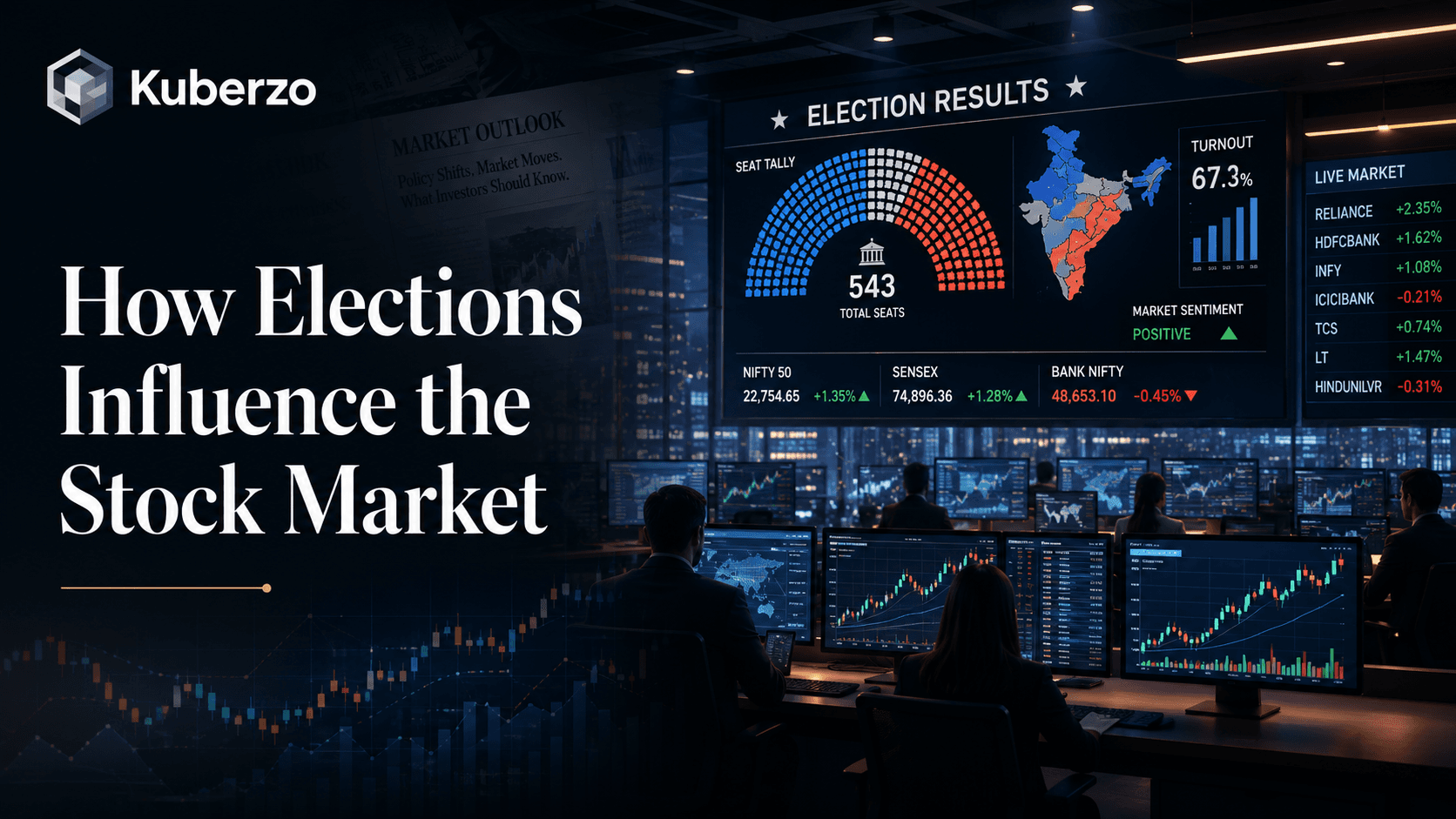
Discover how elections shape investor sentiment, market volatility, and stock prices—and why long-term investing matters more than political headlines.
Elections are among the most closely watched political events in any country, not just by voters but also by investors. Whether it's a national election or a major state election, financial markets often respond even before the results are announced.
But why does this happen? The answer lies in investor expectations. Election outcomes can influence government policies, economic reforms, taxation, infrastructure spending, and even interest rates, all of which affect the stock market.
Understanding how elections impact the share market can help investors make informed decisions rather than reacting to short-term market movements.
Why Do Markets React to Elections?
Financial markets dislike uncertainty. Before an election, investors often wait to see which party or coalition will form the government and what policies they are likely to introduce.
If investors expect political stability and pro-business reforms, confidence generally increases, supporting higher stock prices. On the other hand, uncertain outcomes or unexpected policy changes may lead to short-term market volatility.
This is why the stock market today often experiences increased activity during election periods.
Government Policies and Market Performance
Every government introduces economic policies that influence businesses and investors.
Policies related to infrastructure, taxation, manufacturing, banking, renewable energy, and public spending can affect corporate earnings and investor confidence.
Companies expected to benefit from these policies may see their stocks rise, while sectors facing stricter regulations may experience temporary declines.
Interest Rates and Investor Sentiment
Although central banks operate independently, elections can influence broader economic expectations.
Government spending, inflation expectations, and fiscal policies may indirectly affect bank interest rates and monetary policy decisions over time.
Changes in interest rates influence borrowing costs for businesses and consumers, affecting company profits and stock valuations.
Should Investors Buy or Sell During Elections?
Many new investors believe elections are the perfect time to buy or sell investments. However, predicting short-term market movements is extremely difficult.
Instead of reacting to headlines, investors should focus on long-term fundamentals such as company performance, valuation, and financial goals. Those looking to invest in stocks should avoid making emotional decisions based solely on election news.
Election Volatility Creates Opportunities
Periods of uncertainty often lead to temporary price fluctuations.
Long-term investors sometimes view these market corrections as opportunities to accumulate quality businesses at attractive valuations. However, investment decisions should always be based on research rather than speculation.
Whether you choose to buy stocks online or invest through mutual funds, maintaining discipline during volatile periods is essential.
Long-Term Perspective Matters
History shows that while elections may create short-term volatility, markets eventually focus on economic growth, corporate earnings, and business fundamentals.
Successful investors understand that long-term wealth creation depends more on staying invested than attempting to predict election outcomes.
Diversification, regular investing, and patience remain some of the most effective investment strategies regardless of political events.
Final Thoughts
Elections can influence the stock market by shaping investor sentiment, government policies, and economic expectations. While short-term volatility is common, long-term investment success depends on strong financial planning rather than political predictions.
Instead of reacting to every election headline, investors should focus on building diversified portfolios, understanding market fundamentals, and making decisions aligned with their financial goals.
If you're planning to begin your investment journey and are confused about where to start, follow our experts at Kuberzo.
Frequently Asked Questions
Why does the stock market become volatile during elections?
Markets react to uncertainty surrounding government formation, economic policies, and investor expectations, leading to short-term price fluctuations.
Do election results always affect stock prices?
Election outcomes can influence market sentiment, but long-term stock performance depends primarily on corporate earnings, economic growth, and business fundamentals.
Should I invest in stocks during an election year?
Yes, provided your investment decisions are based on long-term financial goals rather than short-term political events or market speculation.
How do interest rates influence the stock market?
Changes in interest rates affect borrowing costs, corporate profits, consumer spending, and investment decisions, all of which influence stock prices.
Is it a good idea to buy stocks online during market volatility?
Market volatility can create investment opportunities, but decisions should be based on research, diversification, and long-term planning rather than temporary market movements.
Which sectors benefit the most after elections?
The impact varies depending on government policies, but sectors such as infrastructure, banking, manufacturing, defense, renewable energy, and public utilities often receive close investor attention.