
Rebalancing Your SIP Portfolio as You Approach Your Financial Goals
By Saahil Madhogaria
About the Author
Saahil Madhogaria is an MBA student at SOIL Institute of Management with a background in Game Art & Animation and experience as a 3D Artist. He writes about marketing, business, personal finance, careers, and MBA life.
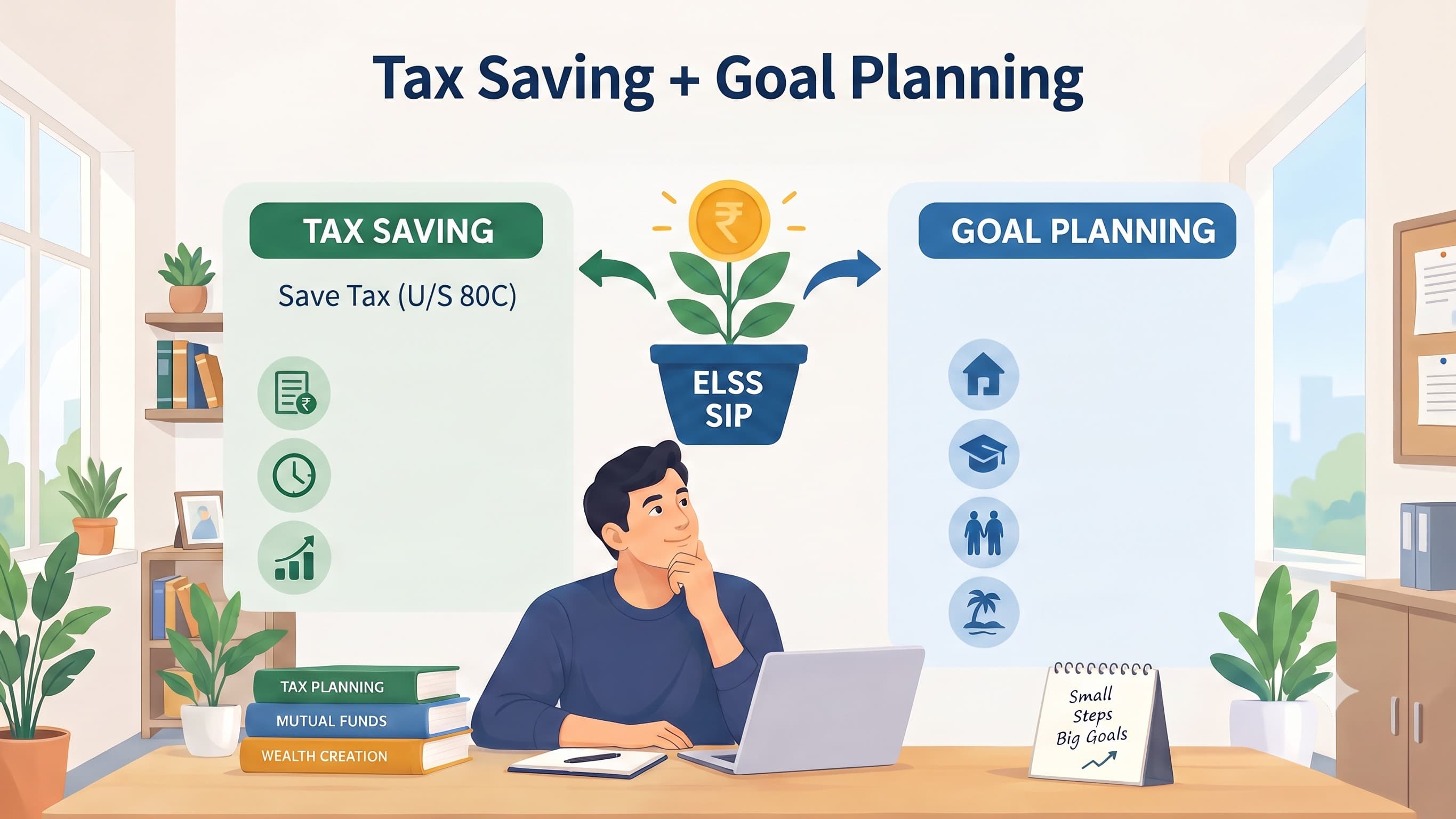
A SIP is an effective way to build long-term wealth, but your strategy shouldn’t stay static as your goals draw near. Learn how adopting a glide path approach and rebalancing your portfolio from high-growth equity to stable debt can protect your accumulated corpus from sudden market corrections when you need the money most.
Rebalancing Your SIP Portfolio as You Approach Your Financial Goals
A SIP can help build wealth over many years, but the strategy that works at the beginning of a goal may not be appropriate when the goal is close. A portfolio with high equity exposure can offer long-term growth potential, but it can also experience sharp short-term falls.
That is why goal based asset allocation should evolve with time. Ask not only how much the SIP can grow, but how much risk you can afford when the money is actually needed.
Why should you rebalance near a goal?
Suppose you are investing for a child's education in five years. If most of the required corpus is still in equity just before the payment is due, a market correction could reduce the amount available at exactly the wrong time.
Mutual fund portfolio rebalancing means bringing investments closer to an allocation suited to the goal, time horizon and risk capacity. It is not necessarily a response to a falling market. It is a planned adjustment that helps ensure the portfolio continues to match the purpose for which you are investing.
When should you start shifting equity to debt?
There is no universal rule such as "shift three years before the goal". The timeline depends on the goal, corpus size, cash-flow needs, existing allocation and your ability to handle volatility.
A useful approach is glide path investing: gradually reduce equity exposure and increase relatively lower-volatility debt or other suitable assets as the goal approaches.
For example:
10+ years away: Equity may play a larger role if your risk profile allows it.
5–10 years away: Review whether your current allocation still fits the goal.
Around 3–5 years away: Consider reducing excessive equity concentration, particularly if a large portion of the required corpus has already been accumulated.
Near the goal: Money required soon can be moved towards investments more suited to the short horizon and liquidity requirement.
Should you stop your equity SIP?
Not necessarily. "When to stop equity SIP" is better answered by looking at the goal rather than the calendar.
You may reduce or stop fresh equity contributions when the required corpus is largely built and the remaining time no longer justifies the same level of equity risk. Another option is to redirect new SIPs towards debt-oriented or other suitable investments instead of selling the entire equity portfolio at once.
How can you secure mutual fund profits?
"Securing profits" does not mean locking in a guaranteed return. It means reducing the amount of the goal corpus that remains exposed to equity-market fluctuations.
Imagine a ₹20 lakh education goal due in four years. If you have already accumulated ₹18 lakh but remain heavily invested in equity, the entire required amount could still be affected by a market fall. If the market declines shortly before the fee payment, you may have to sell more units to meet the same expense.
A gradual shift can align the portfolio more closely with the amount and timing of the future withdrawal. The objective is not to predict the next correction. It is to reduce the consequences of a correction when you have less time to recover.
Is moving an SIP to a liquid fund before the goal always right?
No. A liquid fund may suit some short-term needs, but it is not automatically the right destination for every goal.
Consider the exact time horizon, withdrawal schedule, liquidity needs, taxation and risks of the chosen investment. For a goal only months away, capital stability and liquidity may matter more than seeking additional equity returns. For a goal several years away, retaining some growth exposure may still be appropriate.
A practical way to rebalance your SIP portfolio
Start with the goal amount and date rather than the mutual funds you currently own.
1. Calculate the amount required. Estimate the future cost of the goal rather than simply using today's expense.
2. Check the accumulated corpus. Compare your current investments with what you need to achieve.
3. Separate growth money from goal money. Money required much sooner should not automatically carry the same risk as money that can remain invested for another decade.
4. Decide where new SIPs should go. If equity exposure is already high, future SIPs can potentially be directed towards suitable debt or other assets.
5. Gradually rebalance existing investments. Avoid making decisions solely because markets have recently risen or fallen.
6. Review periodically. Your goal amount, income, timeline and risk capacity can change.
Kuberzo's SIP Calculator can help investors model different monthly contribution scenarios.
What if equity has already delivered strong returns?
A rising market can create another problem: equity may become a much larger part of the portfolio than originally planned.
Suppose your intended allocation was 70% equity and 30% debt. After several years of strong equity performance, the portfolio might become 80% equity. Nothing was deliberately changed, but your risk level increased.
Rebalancing can bring the portfolio closer to its intended allocation. This becomes particularly relevant as the goal approaches because the accumulated corpus needs to be available when required.
Kuberzo's guide to different types of mutual funds can help investors understand how equity, debt, hybrid and passive categories differ.
A simple decision framework
Before making a change, ask four questions:
How far away is the goal?
How much of the required corpus have I already built?
How much of the remaining amount can I afford to expose to equity?
When will I actually need to withdraw the money?
The goal is not to avoid every market fall, but to avoid allowing one fall to derail a goal that is already within reach.
Contact us for a more personalised guidance.
Key takeaway
A SIP is a long-term investing method, not a strategy that must remain unchanged forever. As a financial goal approaches, goal based asset allocation can gradually move from growth towards greater stability.
A sensible glide path can involve higher equity exposure when the horizon is long, gradual shifting as the goal gets closer, and keeping near-term withdrawals less dependent on equity-market movements.
The Kuberzo goal maturity strategy is therefore not about perfectly timing the market. It is about making the portfolio fit the job it has to perform: grow the money early, reduce avoidable risk later, and keep the goal on track.
Frequently Asked Questions
Is ELSS eligible for tax saving?
Eligible ELSS investments can qualify for the applicable deduction, subject to the prevailing tax rules, regime and limit.
Can I claim the benefit under the new tax regime?
Generally, the old Section 80C-style deduction is not available under the new regime.
Is ELSS suitable for retirement?
It can be considered as part of a retirement portfolio when the investor has a long horizon and is comfortable with equity risk.
Can I withdraw ELSS after three years?
Units can generally be redeemed after their applicable lock-in. Each SIP instalment has its own lock-in.
Is ELSS better than PPF?
Neither is universally better. ELSS is market-linked equity, while PPF follows a government-notified interest-rate structure.




