How to Choose the Right Asset Management Company (AMC)
By Shruti Agrawal
About the Author
Shruti Agrawal is part of the Kuberzo team and contributes to finance and personal finance content. She focuses on presenting investment-related topics in a simple, clear and accessible way for readers.
Choosing the right Asset Management Company (AMC) is essential for successful mutual fund investing. Learn the key factors to evaluate, including track record, AUM, fund managers, expense ratio, and investment philosophy, to make smarter investment decisions.
How to Choose the Right Asset Management Company (AMC)
Choosing the right Asset Management Company (AMC) is one of the most important steps in your mutual fund investment journey. While many investors focus only on fund returns, the quality of the AMC managing your investment also plays a significant role in long-term wealth creation.
A reliable AMC follows disciplined investment strategies, has experienced fund managers, strong risk management practices, and a proven track record of managing investors' money responsibly.
In this guide, we'll explain how to choose the right AMC and the key factors you should consider before investing.
What is an Asset Management Company (AMC)?
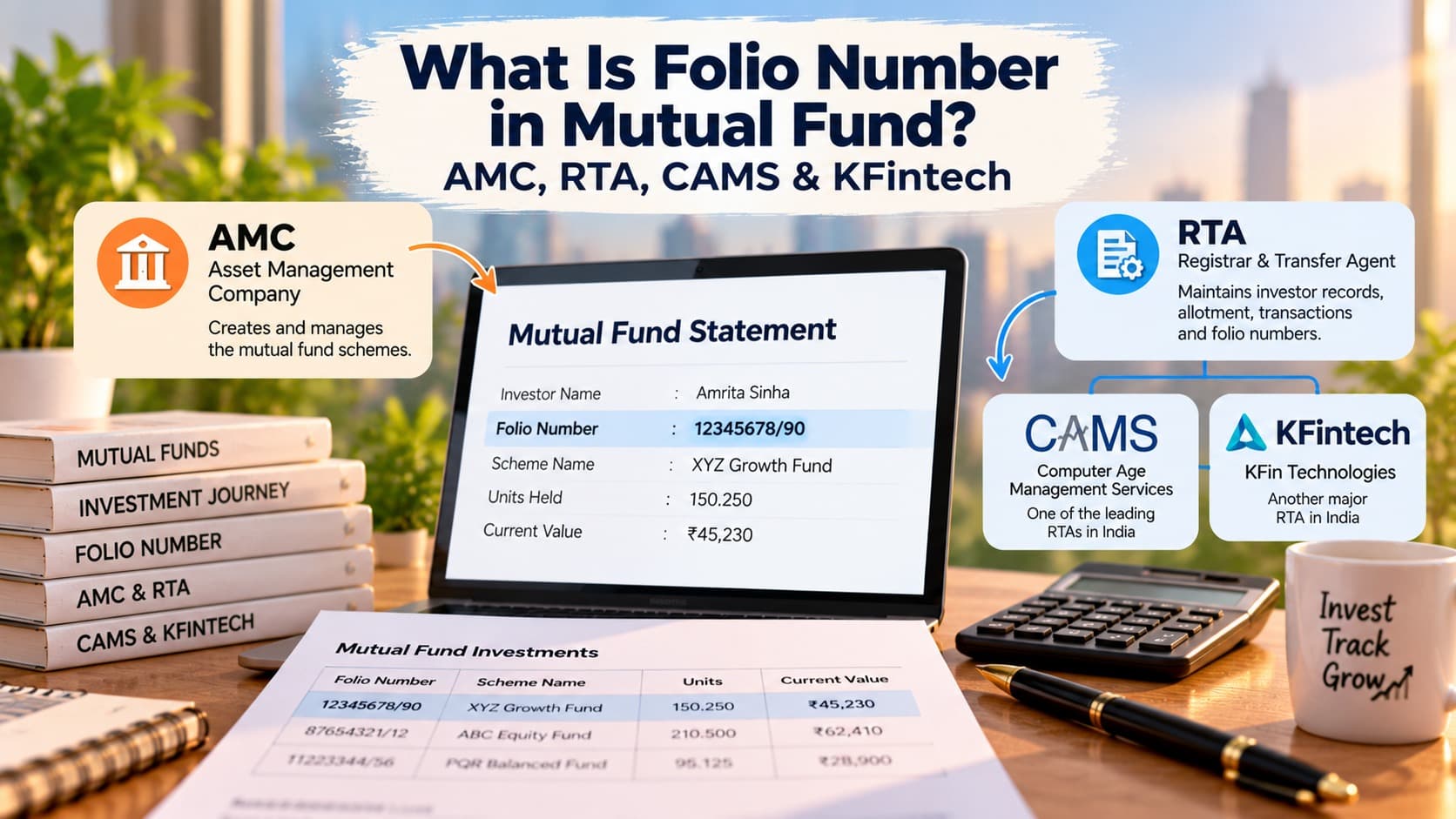
An Asset Management Company (AMC) is a financial institution that pools money from multiple investors and invests it in various assets such as equities, bonds, government securities, and other financial instruments through mutual funds.
The AMC appoints professional fund managers who make investment decisions based on the objectives of each mutual fund scheme.
Why Choosing the Right AMC Matters
Although every mutual fund has its own investment strategy, the AMC influences:
- Investment philosophy
- Risk management
- Fund manager selection
- Research capabilities
- Portfolio quality
- Investor services
A well-managed AMC can consistently deliver better risk-adjusted performance over the long term.
Factors to Consider When Choosing an AMC
1. Check the AMC's Track Record
Start by reviewing the company's history.
Look for:
- Number of years in operation
- Consistency across market cycles
- Reputation among investors
- Long-term performance
Avoid selecting an AMC solely because one of its funds performed well in the last year.
2. Evaluate Assets Under Management (AUM)
Assets Under Management (AUM) indicate the total value of investments managed by an AMC.
A higher AUM often reflects investor confidence, but it shouldn't be the only deciding factor.
Instead, look for:
- Stable growth in AUM
- Well-diversified fund offerings
- Efficient management across different fund categories
3. Assess Fund Performance Consistency
Instead of chasing the highest returns, evaluate how consistently the AMC's funds have performed over:
- 3 years
- 5 years
- 7–10 years
Consistent performers generally indicate disciplined investment management.
4. Review the Fund Manager's Experience
The expertise of the fund manager significantly impacts fund performance.
Check:
- Years of experience
- Funds managed
- Performance history
- Investment approach
Experienced fund managers often navigate market volatility more effectively.
5. Understand the AMC's Investment Philosophy
Every AMC follows a different investment style.
Some focus on:
- Growth investing
- Value investing
- Quality investing
- Large-cap stability
- Mid and small-cap opportunities
Choose an AMC whose investment philosophy aligns with your financial goals and risk tolerance.
6. Compare Expense Ratios
The expense ratio is the annual fee charged for managing your investments.
Lower expenses leave more returns for investors over the long term.
However, don't choose an AMC based only on low fees—balance costs with consistent performance and quality management.
7. Look at Risk Management Practices
A good AMC prioritizes risk management as much as returns.
Check whether the AMC has:
- Diversified portfolios
- Strong research teams
- Clear investment processes
- Effective risk control systems
These practices help reduce unnecessary investment risks.
8. Check Customer Service and Digital Experience
A good investment experience goes beyond returns.
Consider whether the AMC offers:
- Easy online investing
- Mobile app support
- Quick customer service
- Transparent reporting
- Regular portfolio updates
Strong investor support makes managing investments much easier.
9. Read Scheme Documents Carefully
Before investing, review the mutual fund's:
- Scheme Information Document (SID)
- Risk factors
- Investment objective
- Portfolio allocation
- Exit load
- Expense ratio
These documents help you understand exactly where your money will be invested.
10. Match the AMC with Your Investment Goals
There is no single "best AMC" for everyone.
Your choice should depend on your:
- Investment horizon
- Risk appetite
- Financial goals
- Preferred asset allocation
For example:
- Long-term wealth creation
- Retirement planning
- Child education
- Tax saving
- Regular income
Common Mistakes to Avoid
Many investors make avoidable mistakes while selecting an AMC.
Avoid:
- Choosing only based on recent returns
- Ignoring expense ratios
- Following market trends blindly
- Investing without understanding the fund objective
- Overlooking risk factors
- Switching AMCs too frequently
Questions to Ask Before Choosing an AMC
Before investing, ask yourself:
- Is the AMC well-established?
- Does it have experienced fund managers?
- Has it delivered consistent long-term performance?
- Does its investment philosophy match my goals?
- Are the costs reasonable?
- Does it provide good customer support?
If the answer is "yes" to most of these questions, the AMC could be a suitable choice.
Final Thoughts
Choosing the right Asset Management Company (AMC) is about more than selecting the biggest or most popular fund house. A good AMC combines experienced fund management, disciplined investment processes, strong risk management, transparency, and consistent long-term performance.
Instead of chasing short-term returns, focus on finding an AMC that aligns with your financial goals and investment horizon. A thoughtful decision today can help you build a stronger and more stable investment portfolio for the future.dence and build long-term wealth.
Frequently Asked Questions
How do I choose the best AMC for mutual funds?
Look at the AMC's track record, fund performance, AUM, fund manager experience, expense ratio, and investment philosophy before investing.
2. Does a higher AUM mean a better AMC?
Not necessarily. A high AUM reflects investor trust, but you should also consider performance consistency, risk management, and fund quality.
3. Should I invest only in top-rated AMCs?
Top-rated AMCs are generally reliable, but always ensure the mutual fund aligns with your financial goals and risk tolerance.
4. Can I invest in mutual funds from multiple AMCs?
Yes. Investing across different AMCs can improve diversification and reduce concentration risk.
5. Is the expense ratio important when choosing an AMC?
Yes. A lower expense ratio can improve long-term returns, but it should be evaluated along with fund performance and management quality.
6. How often should I review my AMC selection?
Review your investments at least once a year or whenever there are significant changes in the fund's performance, management, or investment strategy.