How Inflation Travels Across Countries: Why Global Events Affect Indian Investors
By Dwarika Verma
About the Author
Dwarika Verma has an academic background in Economics and an interest in personal finance and investing. She contributes to finance-related content, focusing on explaining financial concepts and investment topics in a simple and accessible way.
Discover how global inflation spreads across economies and why international events can influence Indian investments, market risk, and long-term returns.
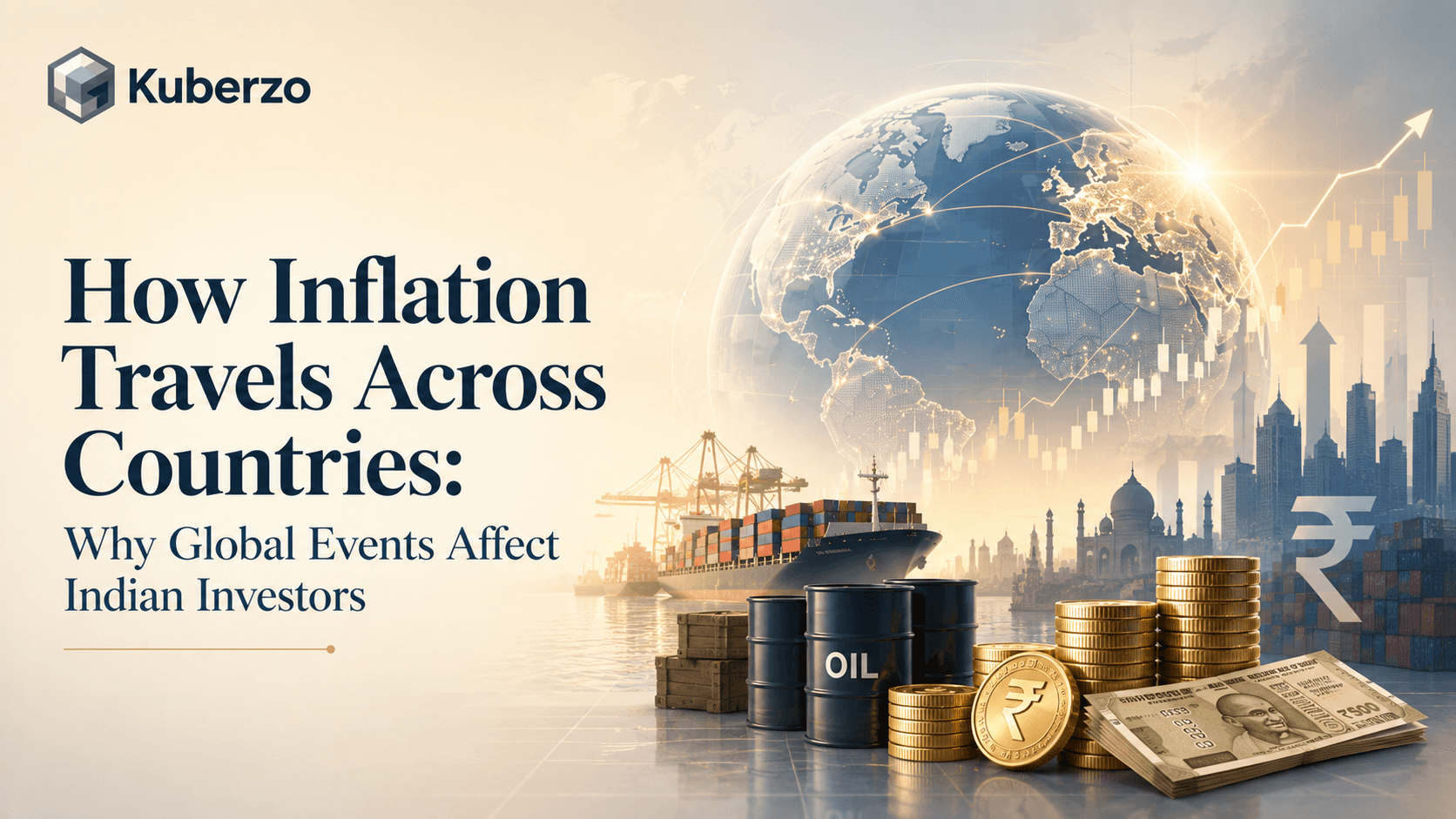
Inflation is often viewed as a domestic issue, but in today's interconnected world, it doesn't stop at national borders. A rise in oil prices in the Middle East, supply chain disruptions in Asia, or changes in interest rates in the United States can all contribute to higher prices in India. This is why understanding inflation has become more important than ever for investors.
Global events can influence everything from fuel and food prices to the share market and investment returns. Knowing how inflation spreads across economies can help investors make informed decisions and choose the best investments during inflation.
How Does Inflation Travel Across Countries?
Countries today are deeply connected through trade, finance, and global supply chains. When inflation rises in one major economy, its effects often ripple across the world.
For example, if crude oil prices increase due to geopolitical tensions, countries like India that import large amounts of oil face higher transportation and manufacturing costs. Businesses pass these costs on to consumers, resulting in higher inflation.
Similarly, disruptions in shipping routes or shortages of raw materials can increase production costs worldwide, affecting prices across multiple countries.
Why Global Events Matter for Indian Investors
India imports several essential commodities, including crude oil, electronic components, and industrial raw materials. Any disruption in global supply chains or international trade can directly impact domestic prices.
Higher inflation affects household budgets while also influencing corporate profits, consumer spending, and market sentiment. As a result, both the stock market today and long-term investment performance may experience increased volatility.
Understanding the inflation impact on investments helps investors prepare for changing economic conditions rather than reacting emotionally to market fluctuations.
Inflation, Risk and Returns
Inflation changes the balance between risk and return. Investments that perform well during stable economic conditions may struggle when inflation rises.
Higher inflation can reduce the real value of investment returns if earnings fail to outpace rising prices. This increases financial risk and requires investors to reassess their portfolios.
At the same time, market uncertainty can increase market risk, making asset prices more volatile. Investors should focus on long-term return on investment rather than short-term market movements.
Best Investments During Inflation
While no investment is completely immune to inflation, some assets have historically performed better than others.
Examples include:
- Equities with strong pricing power
- Gold and other commodities
- Inflation-linked securities
- Diversified mutual funds
- Real estate in certain market conditions
The goal is not to eliminate inflation but to build a portfolio that offers inflation protection over time.
Hedging Against Inflation
One effective strategy is to create a diversified portfolio that includes assets with different risk profiles. A well-balanced investment approach can help act as a hedge against inflation while reducing overall portfolio volatility.
Investors should also review their portfolios regularly and adjust asset allocation as economic conditions change. Strong risk management is often more effective than trying to predict every market movement.
Final Thoughts
Inflation is no longer just a local economic issue; it is increasingly shaped by global events. Rising commodity prices, geopolitical conflicts, supply chain disruptions, and changing interest rates can all influence inflation in India and affect investment returns.
Rather than reacting to short-term market fluctuations, investors should focus on diversification, long-term financial planning, and effective risk management. Understanding how inflation travels across countries can help you make better investment decisions and build a portfolio that remains resilient in an uncertain global economy.
Planning to start your investment journey? Contact us for expert guidance!
Frequently Asked Questions
How do global events cause inflation in India?
Global events such as rising oil prices, geopolitical conflicts, supply chain disruptions, and trade restrictions increase import costs, which can lead to higher inflation in India.
How does inflation impact investments?
Inflation reduces purchasing power and can lower the real return on investments. It also affects corporate profits, interest rates, and overall market performance.
What are the best investments during inflation?
Assets such as equities with strong pricing power, gold, diversified mutual funds, inflation-linked securities, and certain real estate investments have historically performed relatively well during inflationary periods.
What does it mean to hedge against inflation?
A hedge against inflation is an investment strategy designed to preserve purchasing power by investing in assets that tend to maintain or increase their value as inflation rises.
Why does inflation increase market risk?
Higher inflation can create uncertainty about interest rates, company earnings, and economic growth, leading to increased volatility in the stock market and other financial assets.
How can investors protect their portfolio from inflation?
Investors can manage inflation risk through diversification, regular portfolio reviews, long-term investing, and selecting assets that have historically provided inflation protection.